

In 2026 organizations can no longer treat data destruction as an afterthought. With rising cyber threats, strict privacy laws and increasing audits, following proper data destruction guidelines and standards is now a legal and security necessity.

Deleting files or formatting storage devices does not destroy data. Sensitive information can still be recovered using forensic tools. Only certified data destruction performed according to recognized standards and guidelines ensures that data is permanently unrecoverable.
This complete guide explains modern data destruction standards, including NIST 800-88 data destruction, DoD 5220.22-M standards and ISO data sanitization standards, in simple and practical terms.
The Accountability Mandate: Why Guidelines Are No Longer Optional in 2026
In the current regulatory landscape, data destruction has transitioned from an IT “housekeeping” task to a core legal requirement. With the full implementation of India’s Digital Personal Data Protection (DPDP) Act, the “Right to Erasure” is no longer a suggestion—it is an enforceable mandate. For Indian enterprises, simply having a policy to “wipe drives” is insufficient; you must now prove that your methods align with global, state-of-the-art standards to avoid staggering non-compliance penalties.
The Shift from DoD to NIST
Historically, many organizations relied on the DoD 5220.22-M standard. However, in 2026, this method is considered legacy. Modern IT infrastructure relies heavily on SSDs, NVMe, and cloud-based storage, where traditional multi-pass overwriting fails to reach data hidden in “over-provisioned” sectors. This is where NIST 800-88 Rev. 1 has become the gold standard. By focusing on “Media Sanitization” rather than just overwriting, NIST guidelines ensure that data is rendered unrecoverable even against laboratory-grade forensic attacks.
Building a Defensible Audit Trail
The true value of following established guidelines like NIST or ISO 27001 is the creation of a “Defensible Audit Trail.” Under the DPDP Act, if a data breach occurs, the burden of proof lies with the Data Fiduciary. A serialized Certificate of Destruction (CoD), generated through a certified sanitization workflow, serves as your primary legal defense. It proves that your organization exercised “reasonable security safeguards” and that the data was destroyed according to verified, repeatable protocols.
In 2026, compliance is about more than just security—it is about Accountability. By aligning your data destruction policy with recognized international standards, you protect not just your customers’ privacy, but your company’s legal and financial standing in a hyper-regulated market.
What Is Data Destruction?
Data Destruction is the secure and permanent elimination of data from storage media so that it can never be accessed again.
It applies to:
- HDD and SSD drives
- Servers and data centers
- SAN and NAS storage systems
- RAID arrays
- Mobile phones and tablets
- USB flash drives and external media
- Cloud and virtual environments
True destruction of data follows documented, verified and auditable processes.
Why Data Destruction Guidelines Matter in 2026

Improper data disposal is one of the most common causes of data breaches. Old laptops, hard drives or servers often still contain sensitive information.
Without following data destruction guidelines organizations risk:
- Legal penalties
- Regulatory violations
- Financial loss
- Reputation damage
- Loss of customer trust
Certified data destruction ensures:
- Zero data leakage
- Full regulatory compliance
- Audit-ready documentation
- Secure IT asset disposal
The Role of Data Destruction in Cybersecurity Strategy
Data destruction is a critical part of modern cybersecurity. Many organizations secure their networks but ignore the risks created by retired storage devices.
Following approved data destruction standards removes hidden security gaps. It ensures data does not exist beyond its required lifecycle and reduces exposure to internal and external threats.
Secure data destruction strengthens overall cyber resilience.
Key Global Data Destruction Standards and Guidelines
NIST 800-88 Data Destruction Guidelines
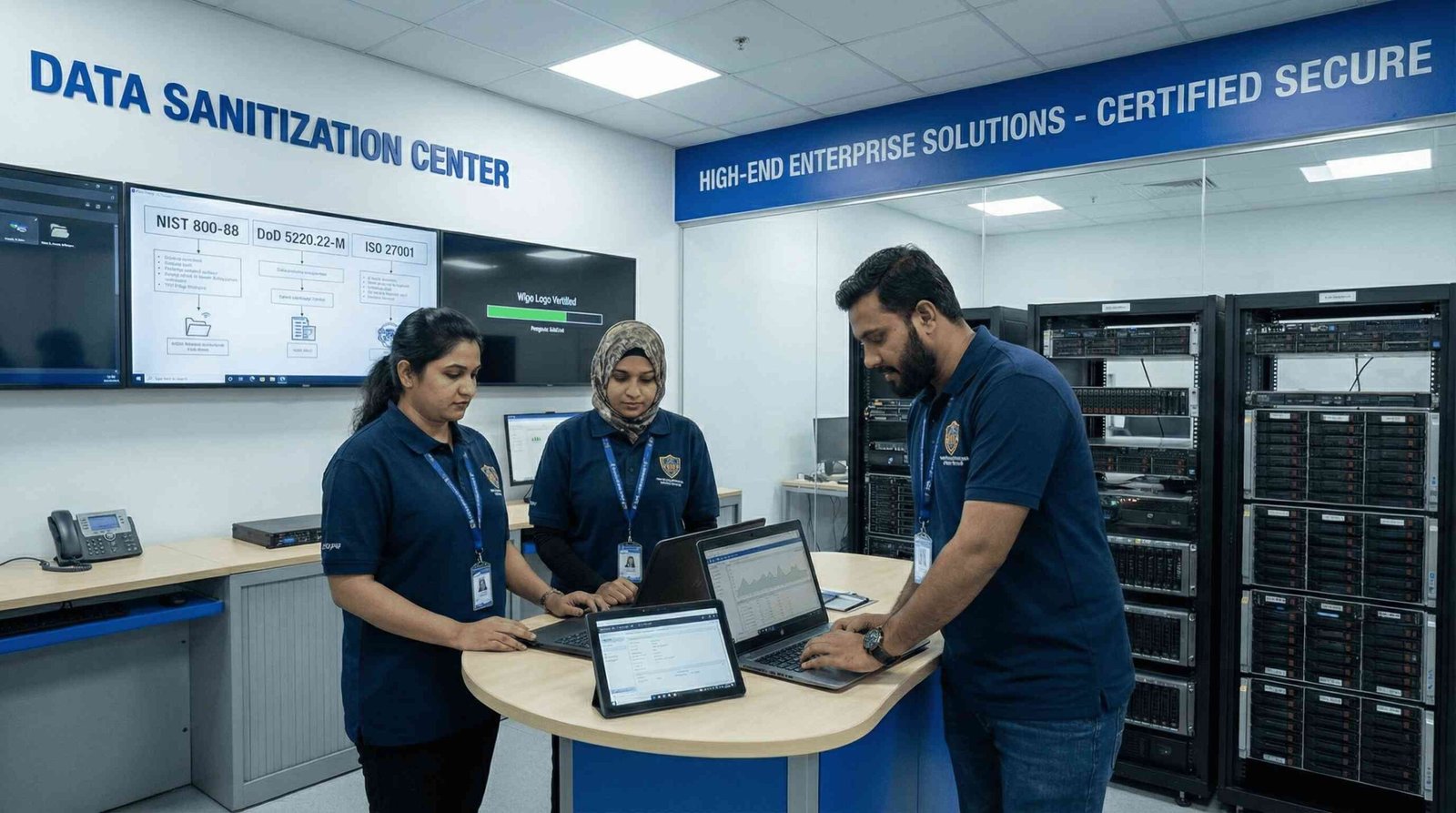
NIST 800-88 is the most widely accepted data destruction standard worldwide. It defines three approved methods:
Clear
Logical overwriting for low-risk environments.
Purge
Advanced overwriting or cryptographic erase that prevents forensic recovery. Ideal for SSDs, servers and enterprise storage.
Destroy
Physical destruction used when reuse is not possible.
NIST 800-88 emphasizes verification and validation, not just erasure.
DoD 5220.22-M Data Destruction Standards
DoD 5220.22-M is a military-grade standard developed for high-security environments.
Key features include:
- Multi-pass overwriting
- Pattern-based and random data writes
- Final verification
It is still widely used for HDD data destruction and government projects.
ISO Data Sanitization Standards
ISO data sanitization standards focus on:
- Secure handling of storage media
- Risk-based destruction methods
- Documentation and audit control
- Continuous security improvement
ISO compliance is often required for enterprises, global organizations and regulated industries.
Why Standards Must Match the Storage Type

Not all storage devices work the same way. Using the wrong method breaks compliance.
- HDDs require multi-pass overwriting
- SSDs need cryptographic erase or ATA Secure Erase
- USB and flash storage need firmware-aware wiping
- SAN and RAID systems require coordinated disk sanitization
Matching the correct standards and guidelines to each device is essential.
Data Destruction vs Simple Deletion
Deleting files is not destruction.
| Method | Data Recoverable | Compliant |
| File deletion | Yes | ❌ |
| Quick format | Yes | ❌ |
| Factory reset | Often | ❌ |
| Certified data wiping | No | ✅ |
| Verified data destruction | No | ✅ |
Only standards-based data destruction ensures permanent removal.
Industry Regulations That Require Certified Data Destruction

Many laws require proof of destruction:
GDPR
Requires secure erasure of personal data and documented compliance.
HIPAA
Mandates proper disposal of healthcare and patient information.
Financial and Government Regulations
Demand certified destruction reports and audit trails.
Failure to comply can lead to severe penalties.
Importance of Documentation and Certification
Compliance is not just about destroying data. It is about proving it.
Certified data destruction includes:
- Verification logs
- Wipe reports
- Certificates of data destruction
- Device serial number tracking
- Standard references used
Without documentation, compliance cannot be proven.
Data Destruction Guidelines for Cloud and Virtual Environments

Cloud environments also require certified data destruction.
Best practices include:
- Secure deletion of virtual disks
- Cryptographic erasure of encryption keys
- Verification of storage reuse
- Compliance reporting
Assuming cloud data is automatically destroyed creates serious risk.
Sustainable Data Destruction and Environmental Responsibility
Modern data destruction standards promote non-destructive sanitization.
Instead of shredding devices:
- Data is securely wiped
- Hardware remains reusable
- E-waste is reduced
This approach supports sustainability goals while maintaining full security.
Common Data Destruction Compliance Mistakes
Avoid these critical errors:
- Using free wiping tools
- Skipping verification
- No destruction certificates
- Applying HDD methods to SSDs
- Ignoring hidden partitions
Any of these can lead to data recovery and compliance failure.
Why Choose Data Sanitization as Your Data Destruction Partner

Choosing the right data destruction partner is critical for security and compliance. Data Sanitization provides certified, standards-based data destruction services backed by 15+ years of experience and 2800+ global clients.
- NIST 800-88 compliant data wiping
- DoD 5220.22-M and ISO-aligned processes
- On-site and remote data sanitization
- SAN, NAS, and RAID expertise
- Verified certificates of data destruction
- Sustainable ITAD practices
We ensure 100% irrecoverable data removal with full audit-ready documentation.
👉 Learn more at www.datasanitization.in
Final Thoughts: Data Destruction Standards Are Non-Negotiable
In 2026, following data destruction guidelines and standards is essential for security, compliance and trust.
Certified data destruction:
- Prevents data breaches
- Meets legal requirements
- Protects brand reputation
- Supports sustainability
- Ensures permanent recoverability
Organizations that follow recognized standards and guidelines stay compliant, secure and future-ready.
Ready for Certified Data Destruction?
If your organization needs secure, compliant and sustainable data destruction, choose a professional partner that guarantees:
- 100% unrecoverable data removal
- Verified and certified processes
- Global compliance alignment
- Environment-friendly sanitization
Your data deserves permanent, proven destruction.