
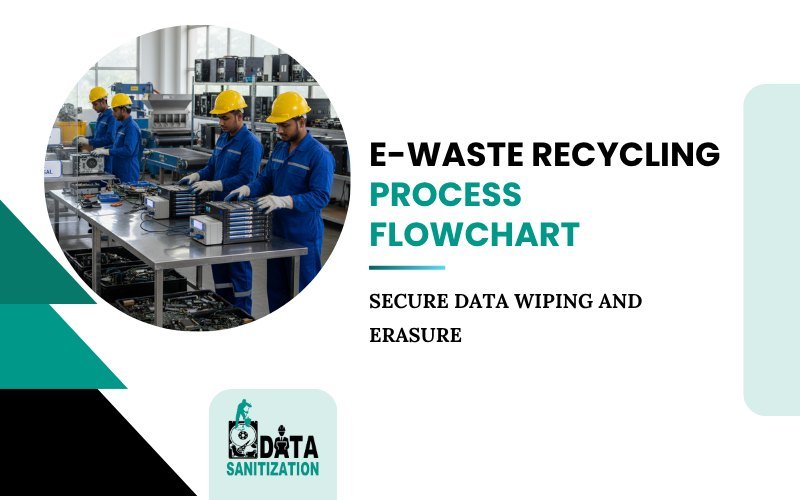
In today’s tech-driven world, e-waste is more than just old, discarded electronics — it poses significant risks to data security. Devices like computers, smartphones, tablets, laptops, smartwatches, printers and external storage devices often store confidential data, including personal, corporate and financial information. Improper disposal can lead to identity theft, corporate espionage and legal liabilities.
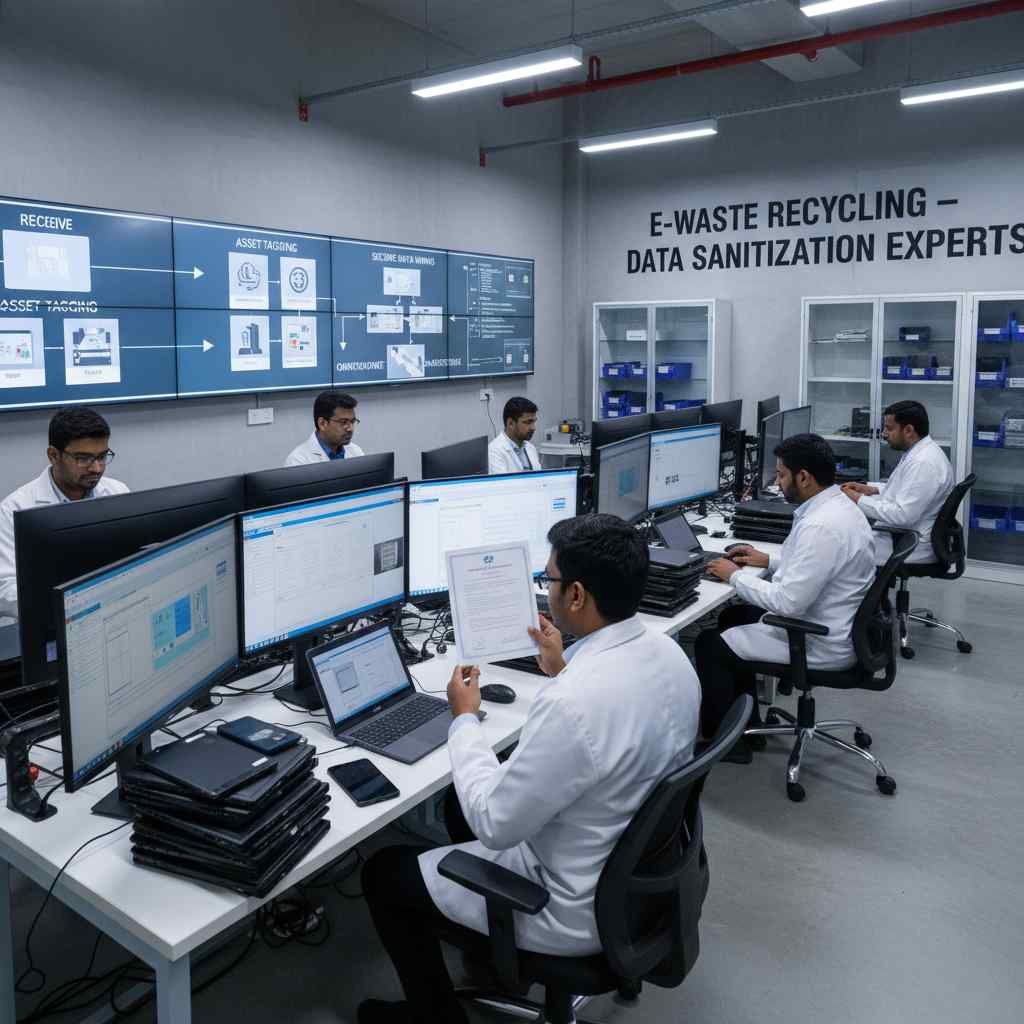
This is where data sanitization experts come into play. By employing industry-leading data erasure methods and secure data wiping techniques, professionals ensure that sensitive information is permanently destroyed before e-waste is recycled. Let’s explore the step-by-step e-waste recycling process, highlighting how data sanitization — such as data destruction and data wiping — integrates seamlessly into every stage.
The Broken Link: Why Your E-Waste Flowchart Needs an Upstream Data Gate
When mapping out an enterprise IT asset disposition (ITAD) workflow, most operational flowcharts move directly from asset tracking to logistical transit and physical material separation. While this linear process satisfies basic environmental disposal checklists, it introduces a catastrophic security blind spot. In 2026, routing active storage media straight into a standard e-waste recycling chain without a verified, upstream sanitization gate is an immense liability.
The Transit Vulnerability
The moment an old server, desktop, or mobile device leaves your physical premises loaded with active storage media, your corporate data exposure peaks. If an un-wiped hard drive is lost, misplaced, or skimmed from a shipping truck during transit to a third-party material recovery facility, your organization remains completely liable. Under India’s DPDP Act, your legal status as a Data Fiduciary does not expire when equipment is loaded onto a vendor’s truck.
Integrating Security with Sustainability
To achieve audit-ready compliance, your e-waste flowchart must feature a non-negotiable Data Sanitization Gate at the absolute point of decommissioning. Before any drive undergoes physical sorting or plastic crushing, it must receive a NIST 800-88 compliant purge.
This dual-track approach satisfies two corporate mandates simultaneously:
Absolute Security: Firmware-level overwriting ensures that sensitive corporate intellectual property and customer personal data are completely unrecoverable, even if the physical drive fragments are intercepted later.
Circular Economy Support: Truly sanitized drives do not need to be physically shredded into scrap metal. They can be safely refurbished, extending the hardware life cycle and dramatically boosting your organization’s ESG (Environmental, Social, and Governance) sustainability metrics.
🛠 Step 1: Collection of E-Waste Devices
The process begins with the collection of e-waste from various sources:
📦 Data-containing devices such as laptops, smartphones, hard drives, tablets, memory cards, smartwatches and external drives are carefully identified.
📜 A detailed log is maintained for each device, ensuring traceability throughout the process.
🔒 Data security during the collection stage is critical — this is where data destruction experts prevent any chances of data theft or breach.
🧼 Step 2: Data Security & Sanitization
Before recycling can begin, data sanitization is the most important step:
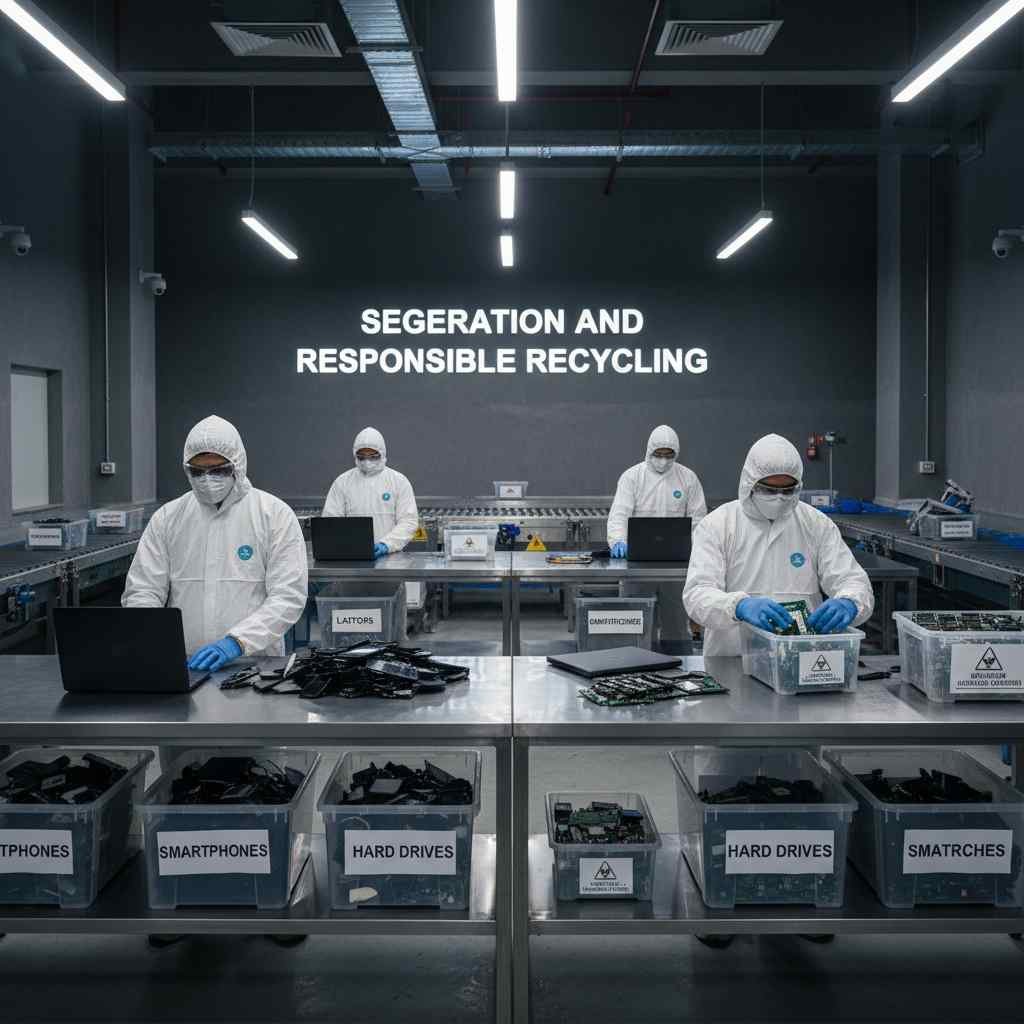
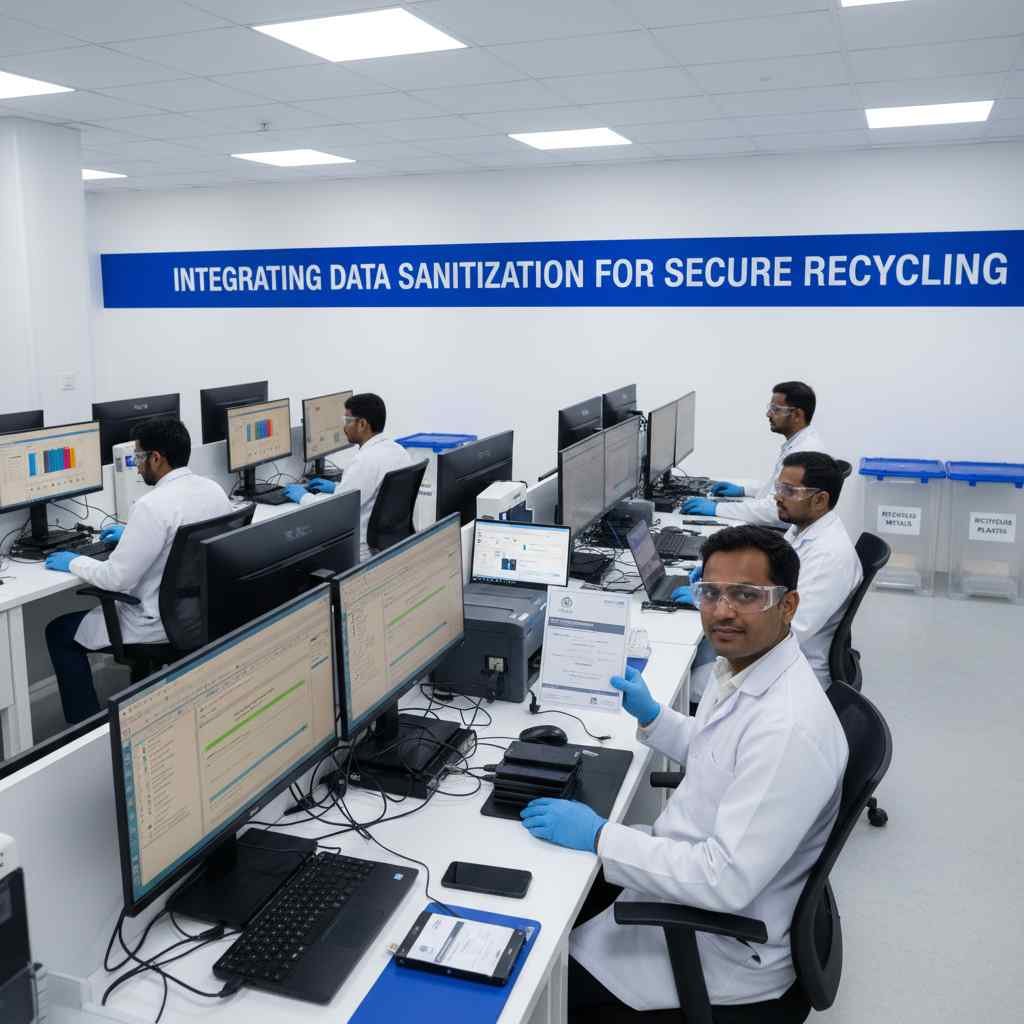
🧹 Data wiping and data erasure software are used to permanently erase all information from digital storage devices.
🔐 Techniques such as:
- Certified data erasure software (performs irreversible wiping of data)
- Degaussing to neutralize magnetic fields in hard drives
- Physical destruction of HDDs, SSDs and other storage media
Each device is issued a certificate of data destruction, ensuring no recoverable data exists and complying with legal standards and corporate data protection policies.
Story Angle: Picture a large corporation upgrading its fleet of laptops. Each device is logged, securely wiped using data erasure software and receives a certificate confirming that all personal and corporate data has been permanently erased. This guarantees that no sensitive data will ever be compromised during the e-waste recycling process.
🔄 Step 3: Segregation of E-Waste
Once the data is securely erased, devices are sorted into categories for efficient processing:
📱 Devices like computers, smartphones, hard drives, tablets and smartwatches are segregated for specialized recycling.
⚠️ Hazardous components like batteries, circuit boards and toner cartridges are separated and handled separately to minimize environmental risks.
🔨 Step 4: Dismantling
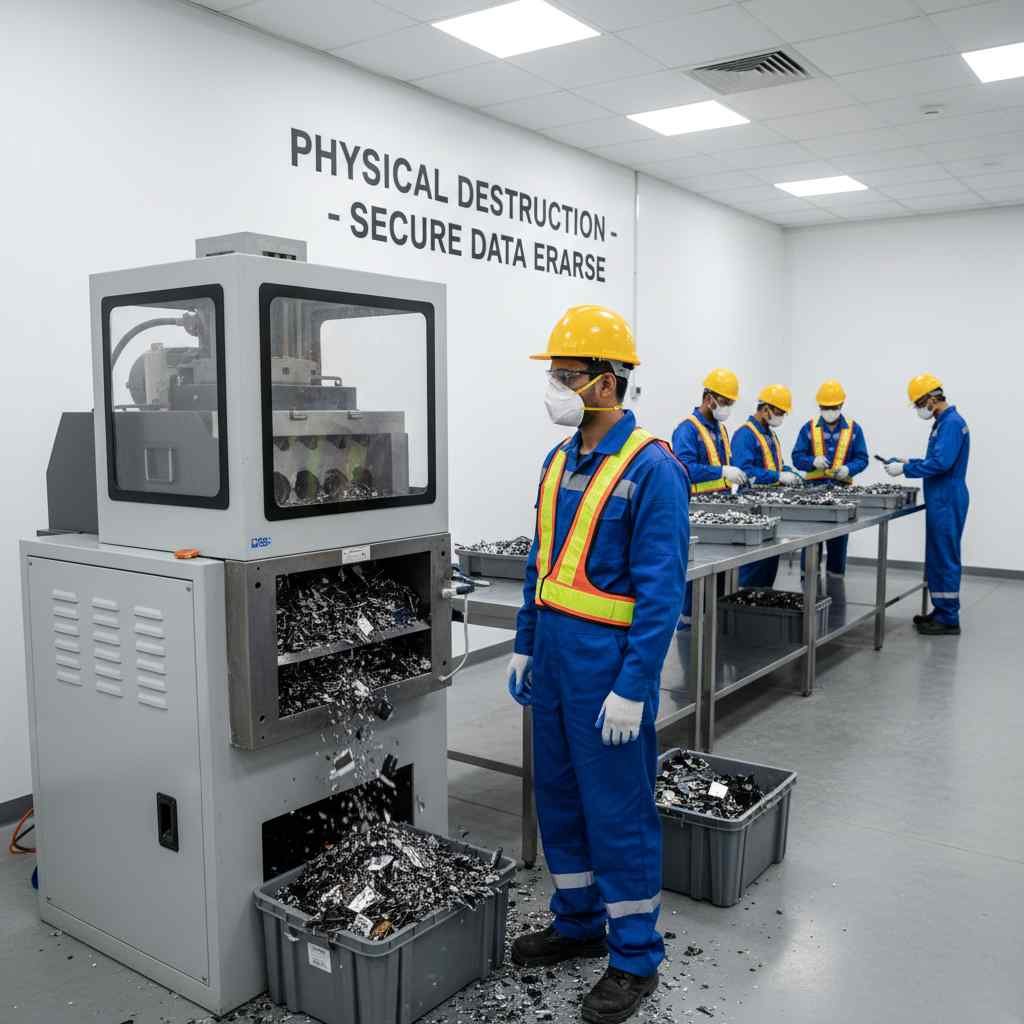
Devices are carefully dismantled, with data-containing components prioritized for secure destruction:
🔧 Storage media, such as HDDs, SSDs, memory cards and SIM cards, are extracted for data destruction if they weren’t fully wiped earlier.
♻️ Valuable metals, plastics and glass are separated and sent for further recycling.
🔍 Data sanitization experts ensure data integrity at every stage by manually checking devices that could potentially store data.
🗑 Step 5: Shredding of E-Waste
After dismantling, the remaining e-waste is shredded into small pieces:
🔨 Storage media that wasn’t previously securely erased undergoes physical destruction through shredding to prevent any future data recovery attempts.
🛡 This is an additional layer of protection for sensitive data that might remain hidden in old devices.
🔍 Step 6: Material Separation
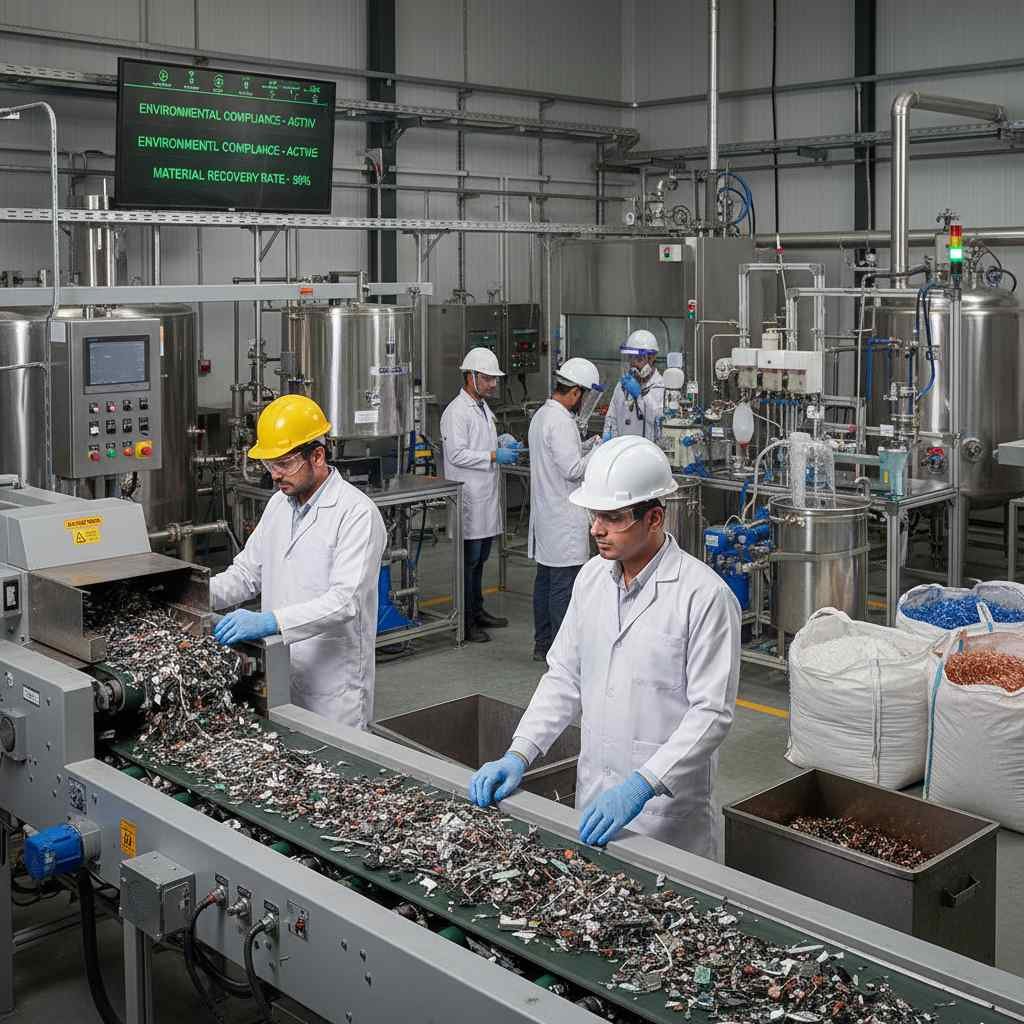
Advanced separation technologies are used to recover valuable materials from the shredded e-waste:
🧲 Magnetic separation for ferrous metals
🔩 Eddy current separation for non-ferrous metals
🧪 Chemical extraction for rare metals and plastics
Hazardous materials are treated safely, ensuring environmental responsibility and regulatory compliance.
🔄 Step 7: Refining & Recovery
Recovered materials, including gold, silver, copper and plastics, are sent back for refining and reuse in manufacturing:
💎 All remaining hazardous or non-recyclable materials are disposed of in accordance with environmental laws and data destruction policies, ensuring that no sensitive data is at risk.
♻️ Step 8: Safe Disposal of Non-Recyclables
Finally, non-recyclable e-waste is disposed of safely using controlled methods like:
🌍 Secure landfill disposal
🔥 Incineration under regulated conditions
The focus here is to ensure that no sensitive data remains accessible and no environmental damage occurs.
🛡 Why Integrating Data Sanitization in E-Waste Recycling Matters
- Protect Sensitive Information: Devices like smartphones, tablets, laptops and storage drives contain highly sensitive information and improper disposal could lead to data breaches.
- Prevent Identity Theft & Corporate Espionage: Without secure data erasure and data destruction, sensitive personal or corporate data can be misused.
- Ensure Compliance: Legal and corporate regulations demand that data is securely erased from devices before disposal.
- Responsible Recycling: By combining data sanitization with environmentally responsible recycling, you help preserve both digital privacy and the planet.
Story Angle: Companies and individuals alike trust leading data sanitization services. With expert data sanitization professionals ensuring secure data wiping, clients can confidently recycle their electronic devices without worrying about data breaches, all while contributing to environmental sustainability.
📝 Suggested E-Waste Recycling Flowchart (Step-by-Step)
Start → Collection → Data Security/Wiping → Segregation → Dismantling → Shredding → Separation → Refining & Recovery → Safe Disposal
🏆 Best Practices for Data-Safe E-Waste Recycling
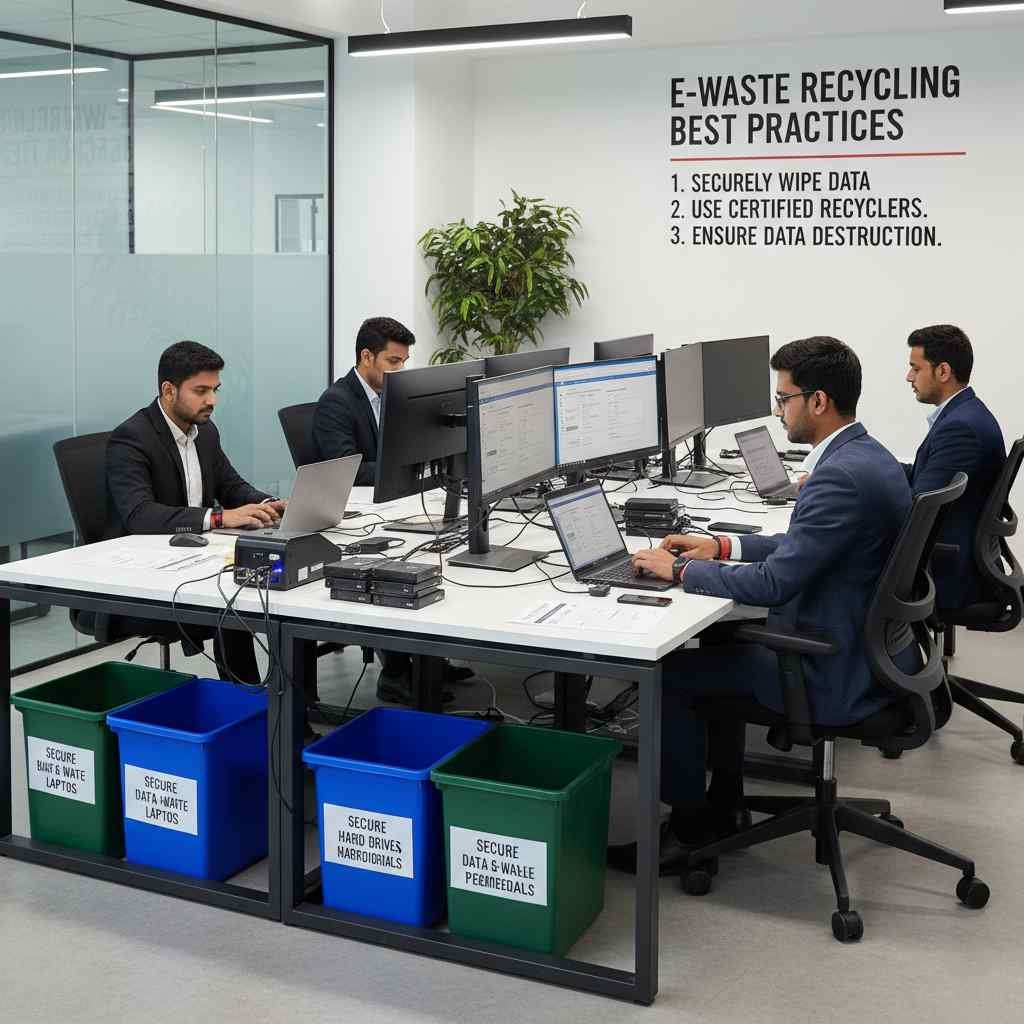
- Always securely wipe or erase data from devices before recycling.
- Use authorized e-waste recyclers with certified data sanitization expertise.
- Keep certificates of data destruction to comply with legal and corporate regulations.
- Avoid discarding electronic waste in regular trash or landfills.
- Encourage data protection and sustainable e-waste recycling in both corporate and personal settings.
📞 Contact Information
For professional data sanitization services and secure e-waste recycling, reach out to us:
📱 Phone: +91-852-770-9690
✉️ Email: support@datasanitization.in
🌐 Website: www.datasanitization.in
🏁 Conclusion

Integrating data sanitization into e-waste recycling is critical for ensuring data security and environmental responsibility. Through secure data wiping and data erasure processes, sensitive information is permanently destroyed, making the entire recycling process safe for both individuals and businesses. By choosing certified data destruction experts, you protect your data while contributing to a more sustainable planet.