
In today’s fast-paced IT ecosystem, companies in Bangalore, Hyderabad, Delhi, Mumbai, Chennai, and other major tech hubs frequently upgrade laptops, PCs, workstations, and servers. However, what happens to old IT assets is often overlooked — and the consequences can be catastrophic.
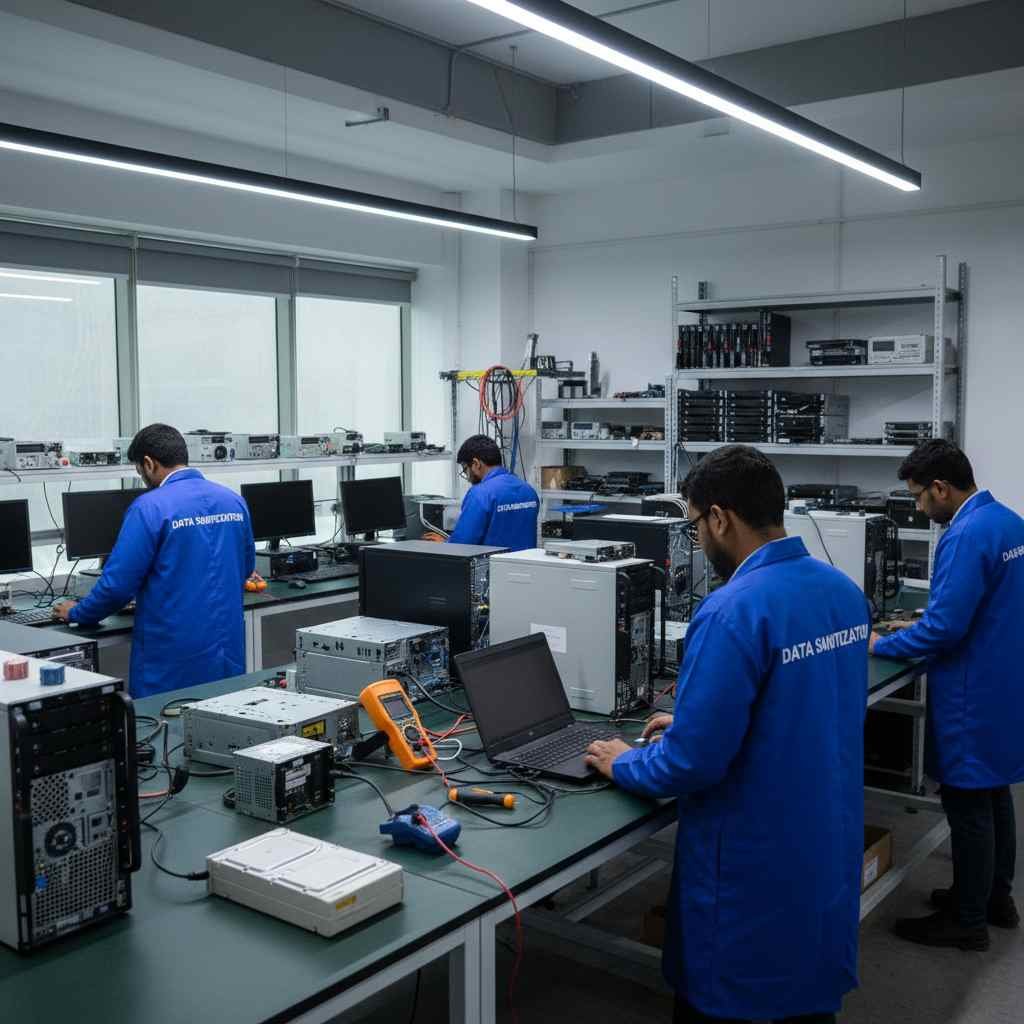
Every un-sanitized device sold or auctioned to unknown vendors can become a data breach waiting to happen. Sensitive corporate information, government tenders, intellectual property, client databases, and employee records can fall into the wrong hands — sometimes even foreign intelligence agencies.
The Geopolitical Threat: Corporate Espionage and the Data-Leak Pipeline
The risk of selling un-wiped company storage devices goes far beyond identity theft; it has evolved into an active pipeline for corporate espionage and international intelligence gathering. Independent forensic audits of decommissioned servers bought from local scrap vendors across major Indian tech hubs like Bengaluru, New Delhi, and Hyderabad have revealed alarming discoveries. Critical data infrastructure—including defense project details, internal bank communications, and active government tender strategies—frequently changes hands without the seller realizing it.
From Scrap Metal to Foreign Servers
When an organization disposes of a server array or a batch of office laptops via unverified asset buyback programs, the equipment rarely stays local. Sophisticated threat actors routinely buy up bulk e-waste specifically to harvest intact storage media. Using advanced chip-off forensics, they can extract un-encrypted data fragments from hidden or “wear-leveled” blocks on SSDs. Research indicates that corporate intellectual property recovered from discarded Indian hardware has been discovered transmitting directly to foreign servers hosted in heavily restricted regions overseas.
The Zero-Tolerance Penalty Landscape
In 2026, Indian enterprises can no longer treat secure asset decommissioning as an afterthought. Under the Digital Personal Data Protection (DPDP) Act, companies are legally classified as Data Fiduciaries. Handing an un-wiped hard drive over to an uncertified scrapper means you have fundamentally failed your legal obligation to provide “reasonable security safeguards.”
If a data breach can be traced back to a discarded corporate asset, a simple “we thought the data was deleted” will not save your firm from an audit by the Data Protection Board (DPB). Mitigating this risk requires a transition to enterprise-wide NIST 800-88 compliance, backed by a serialized Certificate of Destruction. This is the only definitive way to close the loop on corporate exposure, ensuring your decommissioned data never crosses international borders.
💣 The Hidden Danger: Improper IT Asset Disposal
Many IT companies and SMBs sell used laptops, desktops, servers, or storage devices to local vendors without proper data wiping. Common risky practices include:
💾 Deleting files manually instead of using certified data destruction methods
💾 Formatting drives without secure overwriting
💾 Selling devices in bulk to intermediaries without tracking the final buyer
While these may seem harmless, they create massive vulnerabilities:
1️⃣ Recovered Sensitive Data: Advanced forensic tools can restore deleted files from HDDs, SSDs, and servers.
2️⃣ Intelligence Risks: Devices sold to unverified vendors may be accessed by actors with foreign affiliations.
3️⃣ Corporate Espionage: Government tenders, R&D blueprints, and internal reports can be leaked due to improperly sanitized IT assets.
🕵️♀️ Real-World Examples
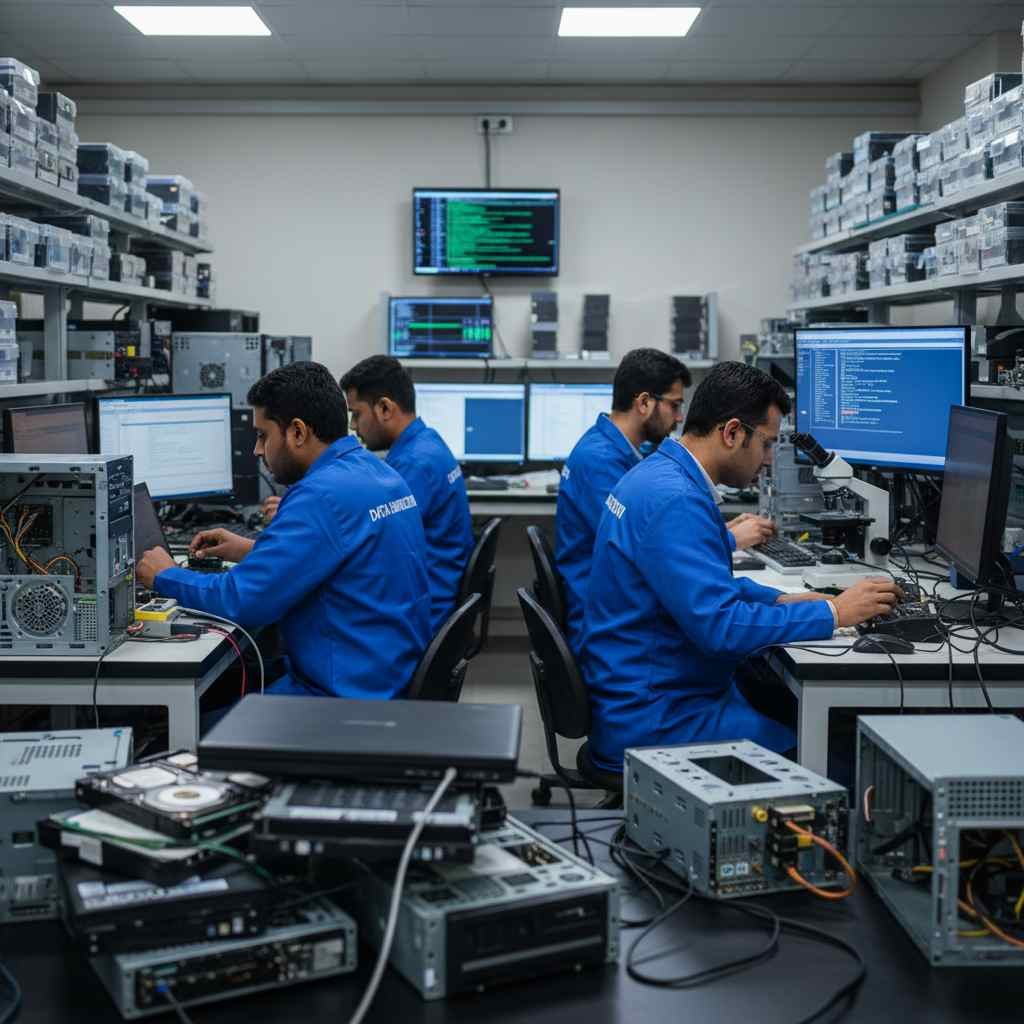
💡 Bangalore IT Hub: Several un-wiped servers and laptops sold to unverified vendors contained sensitive government project data. Forensic analysis revealed the data was transmitted to servers outside India.
💡 Hyderabad & Delhi: Old workstations and laptops from major corporations, including startups handling critical R&D, were auctioned without certified sanitization. Confidential product designs and client data were compromised.
💡 Mumbai & Chennai: Corporate tender documents, employee databases, and proprietary software code were recovered from supposedly “wiped” IT assets sold to unknown resellers.
🧩 Why Simple Deletion Is Not Enough
Many companies believe that deleting files or formatting drives is sufficient — unfortunately, it’s not ❌
🧠 SSDs and modern storage devices can retain recoverable fragments even after formatting
🧠 Servers and workstations often have hidden partitions or RAID arrays storing sensitive data
🧠 Laptops, PCs, and external storage devices can be easily recovered by malicious actors using low-cost forensic tools
The result? Leaked government tenders, stolen intellectual property, and compromised client data 📉
📊 Survey Insight: Mr. Shubham Singhal’s Findings

According to a survey conducted by Mr. Shubham Singhal, Expert Data Sanitization Engineer, several IT companies in Bangalore and Delhi were found selling old IT assets — including laptops, PCs, servers, and workstations — without proper data wiping.
🔍 Key Findings Include:
💠 Recovered Sensitive Data: Engineers recovered government tenders, corporate emails, client databases, and R&D files from supposedly wiped devices.
💠 Foreign Intelligence Risk: Some devices were traced to vendors linked to foreign intelligence networks, transmitting confidential data abroad.
💠 High-Level Leaks: Critical corporate strategies and project information were exposed, putting companies at risk of espionage and financial loss.
This survey highlights the real-world dangers of neglecting certified data sanitization and reinforces the importance of professional handling of IT assets.
🔐 Certified Data Sanitization: The Only Safe Way
To protect sensitive data and comply with data protection regulations, companies must adopt professional data sanitization services ✅
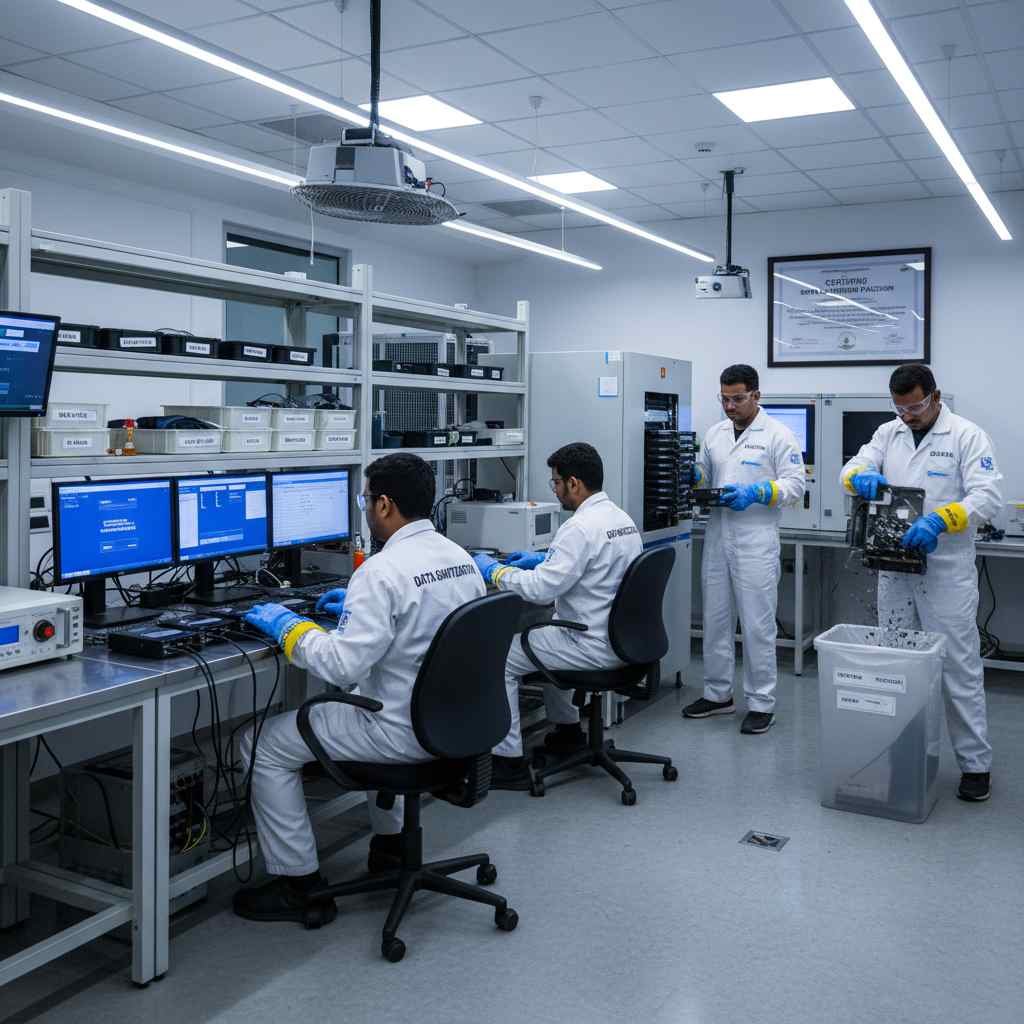
🧰 Secure Wiping: Overwriting all storage blocks multiple times to prevent recovery
🧰 Degaussing: Destroying magnetic storage on HDDs and tape backups
🧰 Physical Destruction: Shredding or crushing drives for devices beyond reuse
🧰 Certificate of Data Destruction: Legal proof for audits and compliance
This process is crucial for:
💼 Corporates handling confidential projects
🏛️ Government contractors managing sensitive tenders
🏦 Banks & financial institutions with critical client data
⚠️ Risks of Neglecting Data Sanitization
1️⃣ Corporate Espionage: Competitors or malicious vendors can extract confidential strategies and files
2️⃣ Regulatory Non-Compliance: Data protection laws, ISO certifications, and tenders require certified sanitization
3️⃣ Financial Loss: Recovering leaked data or facing legal actions can cost millions 💸
4️⃣ Reputation Damage: Data breaches can permanently damage corporate credibility and client trust
🧾 How to Safely Dispose of IT Assets
Professional data sanitization experts ensure secure and compliant disposal:
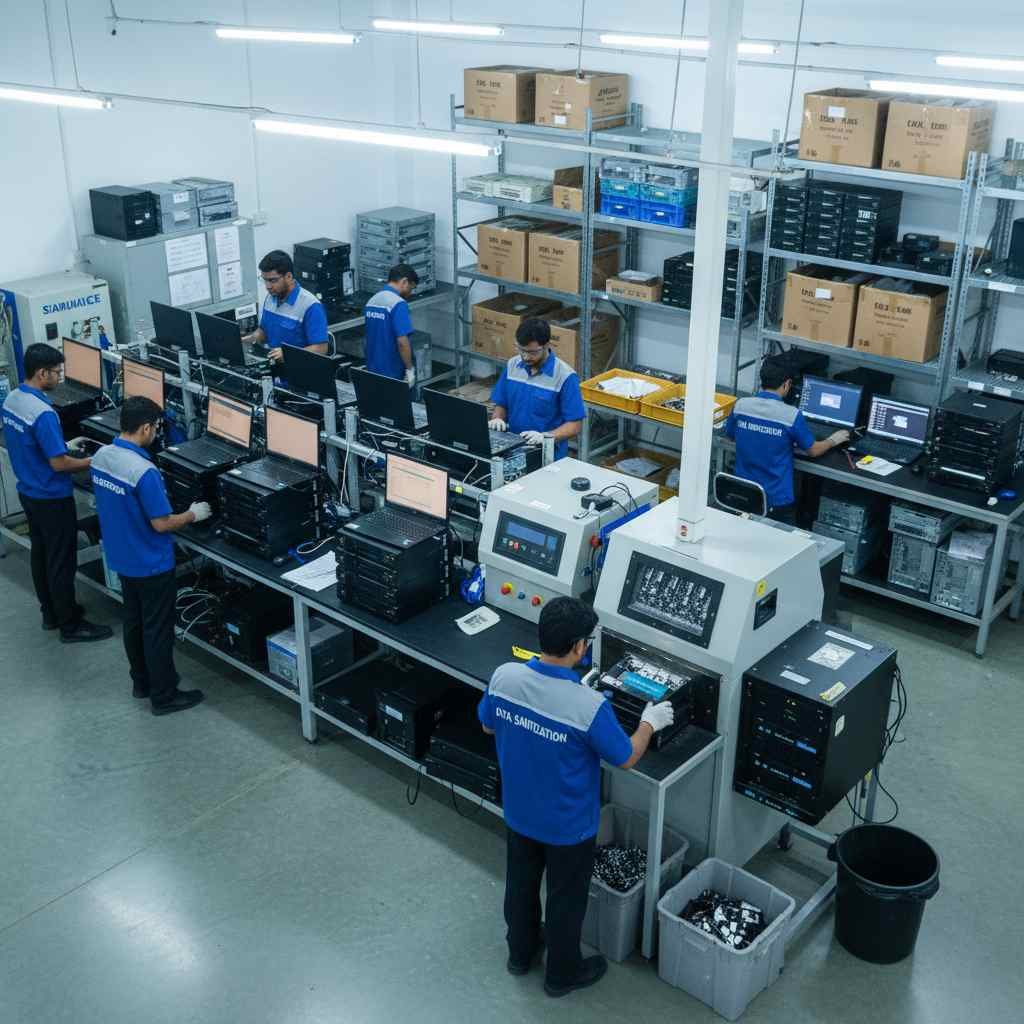
🖥️ Asset Audit: Track every laptop, desktop, server, and storage device
🧹 Certified Wiping: Use DoD 5220.22-M, NIST, or other international standards
🔍 Testing: Verify drives are completely unrecoverable before resale
📜 Documentation: Maintain records and certificates for audit purposes
🌱 Eco-Friendly Recycling: Dispose of hardware safely, reducing e-waste
🧰 Professional Data Sanitization in India
Companies like DataSanitization.in specialize in secure IT asset disposal and data sanitization services across India 🇮🇳
💼 Services: Laptops, PCs, servers, workstations, storage arrays
📋 Compliance: ISO-certified methods & government-approved procedures
🌍 Coverage: Bangalore, Hyderabad, Delhi, Mumbai, Chennai, and pan-India
🔒 Guarantee: Secure destruction of data with audit-ready certificates
📍 Address: 704, Meghdoot Building-94, Nehru Place, New Delhi–110019, India
📞 Phone: +91-852-770-9690
✉️ Email: support@datasanitization.in
🌐 Website: www.datasanitization.in
🧠 Conclusion
The improper disposal of IT assets is a hidden but severe threat to corporations and government bodies in India 🇮🇳. Without certified data sanitization, laptops, desktops, servers, and workstations can leak sensitive information — sometimes even to foreign intelligence agents 😨.
✅ Certified data sanitization is the only reliable way to protect confidential data, comply with information security regulations, and prevent costly data breaches.
Surveys like those conducted by Mr. Shubham Singhal show that even “wiped” devices can pose serious risks — making professional sanitization not just an option, but a necessity.