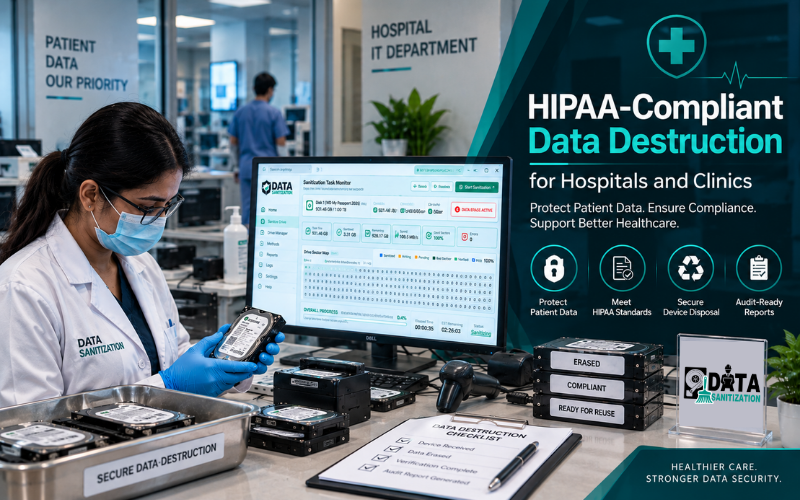
Hospitals, clinics, diagnostic centres, medical laboratories and healthcare organisations handle highly sensitive information every day. Patient records, medical reports, insurance details, billing information and other protected health information (PHI) can remain on computers, hard drives, SSDs, servers, backup devices and medical equipment even after the equipment is retired.
Deleting files or formatting a drive is not automatically the same as secure data destruction.
For healthcare organisations, retired IT equipment should be handled through a controlled process covering ePHI disposal, data sanitization, asset tracking, secure handling and final disposition.
Quick Answer: What Is HIPAA Data Destruction?
HIPAA data destruction is the controlled process of removing or destroying protected health information from electronic media before the media is reused, transferred, recycled or disposed of.
The HIPAA Security Rule requires covered entities to have policies and procedures for the final disposition of ePHI and the hardware or electronic media where it is stored. It also requires procedures for removing ePHI before electronic media is made available for reuse.
The exact method depends on the storage technology, information sensitivity and intended disposition. Depending on the circumstances organisations may use appropriate data sanitization, clearing, purging or physical destruction methods.
Why Data Destruction Matters for Hospitals
Healthcare organisations retire large numbers of devices throughout their IT lifecycle.
These can include:
- Hospital computers and workstations
- Laptops and tablets
- HDDs and SSDs
- Servers and enterprise storage
- Backup drives
- USB and flash drives
- Mobile devices
- Medical and diagnostic equipment
- Printers and multifunction devices
- Network storage and other removable media
These devices may contain patient information, medical records, insurance information, identification data, employee information and internal business records.
If an old device is sent directly to a recycler, reseller or another third party without proper sanitization, sensitive information may remain accessible.
HHS specifically states that covered entities must apply appropriate safeguards when disposing of PHI and should not simply abandon electronic media containing PHI in publicly accessible disposal containers.
What Does HIPAA Require for Electronic Media Disposal?
HIPAA does not prescribe one destruction method for every storage device.
Instead, healthcare organisations need appropriate policies and procedures that protect PHI during disposal and address the final disposition of ePHI and the media on which it is stored.
HHS identifies examples such as clearing electronic media, purging suitable media or destroying the media. HHS also points organisations toward NIST SP 800-88 for practical media sanitization guidance.
This means HIPAA compliance and data destruction should be treated as a process rather than simply purchasing a hard drive shredder or running a formatting command.
For a broader technical overview, see our guide to NIST 800-88 data destruction standards.
What Healthcare Data Should Be Destroyed?
A strong healthcare data destruction policy should cover every storage location where PHI or sensitive organisational information may exist.
Patient and Medical Records
EHR data, clinical notes, diagnostic reports, prescriptions and treatment histories can contain highly sensitive PHI.
Billing and Insurance Data
Payment information, insurance records and financial details can create additional privacy and identity-theft risks.
Backup and Archive Data
Old backup drives are easy to overlook. However, they may contain years of historical patient information.
Removable Media
USB drives, SD cards, memory cards and external drives should also be included in the healthcare data destruction process.
Medical Equipment
Modern diagnostic and healthcare equipment may contain internal storage. Hospitals should identify these storage components before equipment retirement.
HDD vs SSD: Why the Sanitization Method Matters
A common mistake is using the same data wiping method for every storage device.
Traditional HDDs and modern SSDs work differently. SSDs use flash memory, controllers, wear-leveling and other technologies that can make ordinary overwriting approaches unsuitable in some situations.
Therefore, healthcare organisations should select a media-appropriate sanitization method based on the technology and its final disposition.
For reusable HDDs, professional HDD data sanitization may be appropriate.
For SSDs and flash-based devices organisations should use a method appropriate for the specific technology. Our SSD data sanitization service provides a dedicated option for healthcare and enterprise storage retirement.
For devices that cannot or should not be reused, physical destruction may be more appropriate.
Healthcare ITAD and Chain of Custody
Healthcare IT asset disposal (ITAD) should not end when equipment leaves the hospital.
A secure process should maintain control and traceability from collection through final disposition.
A typical workflow can include:
- Identify the device and asset owner.
- Record make, model and serial number.
- Identify the storage technology.
- Determine whether PHI/ePHI is present.
- Select the appropriate sanitization or destruction method.
- Securely transport or process the equipment onsite.
- Perform sanitization or destruction.
- Verify the process where applicable.
- Record the results.
- Issue appropriate documentation.
- Complete reuse, recycling or final disposal.
HHS guidance also addresses control and movement of hardware and electronic media containing ePHI.
Our guide on healthcare IT asset disposal and onsite data wiping explains how secure data handling can fit into a larger ITAD workflow.
BAA and Third-Party Data Destruction
Hospitals do not always perform data destruction internally. They may use an external service provider.
HHS confirms that a covered entity may engage a business associate to dispose of PHI, provided the appropriate contractual safeguards are in place.
Before selecting a provider, healthcare organisations should review:
- Data destruction procedures
- Media handling controls
- Chain-of-custody process
- Asset tracking
- Verification process
- Reporting
- Certificate of Destruction
- Business Associate Agreement requirements
- Final recycling or disposal controls
This is where professional HIPAA compliant data destruction services can provide more control than ordinary e-waste recycling.
Certificate of Destruction and Audit Records
A Certificate of Destruction can provide useful evidence that identified assets were processed.
Depending on the organisation’s process, documentation may include:
- Asset ID
- Serial number
- Device type
- Sanitization or destruction method
- Processing date
- Verification result
- Operator or responsible party
- Project reference
- Final disposition
The certificate itself does not automatically make an organisation HIPAA compliant. The underlying policies, safeguards, contracts and procedures remain important.
NIST SP 800-88 for Healthcare Data Sanitization
NIST SP 800-88 is one of the most useful technical references for building a media sanitization programme.
The current NIST SP 800-88 Rev. 2 was published in September 2025 and superseded Rev. 1. NIST describes media sanitization as a process that makes access to target data infeasible for a given level of effort.
Healthcare organisations can use NIST guidance to help select appropriate sanitization and disposal techniques based on media type, information sensitivity and intended disposition.
Importantly, HIPAA does not require every hospital to use one specific NIST technique. The organisation should establish a reasonable, documented process appropriate to its circumstances.
Data Sanitization Pro: Software for Healthcare Media Sanitization
For hospitals and IT teams handling large numbers of devices, software can make the sanitization process more controlled and easier to document.
Data Sanitization Pro is a Made in India data sanitization software platform designed for enterprise, government, healthcare and ITAD environments.
It supports multiple storage technologies and provides capabilities such as multi-device sanitization, verification, real-time monitoring, audit logging, device information and report generation. It also supports online and offline deployment scenarios for organisations with different security requirements.
For healthcare IT teams, this can be useful when the goal is not only to erase data but also to maintain a more structured record of the sanitization process.
Learn more about Data Sanitization Pro.
Common HIPAA Data Destruction Mistakes
1. Deleting Files and Stopping There
File deletion does not automatically prove that ePHI has been securely removed.
2. Treating Formatting as Complete Sanitization
Formatting should not automatically be considered equivalent to a validated media sanitization process.
3. Using One Method for Every Device
HDDs, SSDs, USB drives and other media may require different approaches.
4. Forgetting Backup Devices
Old backup media can contain large amounts of historical patient information.
5. Losing Asset Traceability
Without serial numbers and movement records, it becomes difficult to demonstrate what happened to individual devices.
6. Choosing a Recycler Without Data Controls
Recycling and secure data destruction are different processes.
Hospital Data Destruction Checklist
Before retiring healthcare IT equipment, confirm that your organisation can:
- Identify every storage device.
- Record asset and serial information.
- Identify PHI/ePHI exposure.
- Select an appropriate sanitization method.
- Control device movement.
- Maintain chain-of-custody records.
- Verify sanitization where applicable.
- Physically destroy media when required.
- Maintain destruction records.
- Obtain a Certificate of Destruction where appropriate.
- Control final recycling or disposal.
Professional Data Destruction for Hospitals and Clinics
At Data Sanitization, we provide professional data wiping and destruction solutions for organisations handling sensitive information.
Our services cover:
- HDD data sanitization
- SSD data sanitization
- Flash and USB storage
- Server and enterprise storage
- Mobile devices
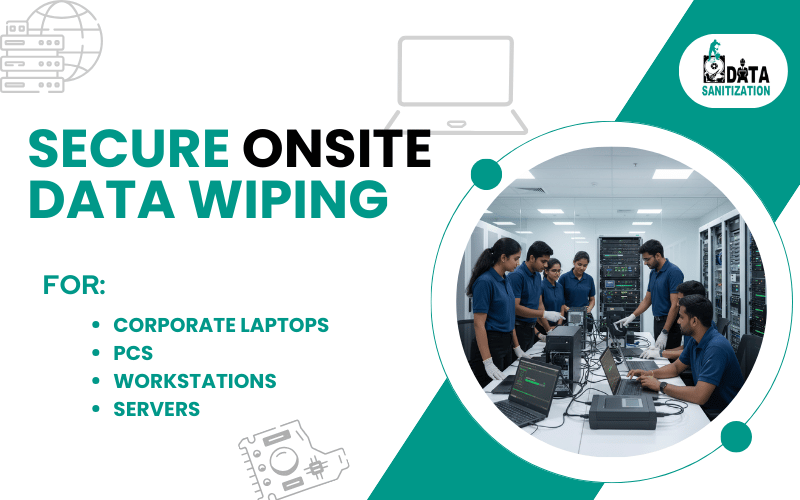
- Onsite data wiping
- Offsite data sanitization
- IT asset disposition support
- Asset tracking and reporting
- Certificate of Destruction
- Secure media destruction
For larger healthcare infrastructure projects, our data center decommissioning services can support secure server retirement and storage sanitization.
Website: www.datasanitization.in
Email: support@datasanitization.in
Phone: +91-852-770-9690
Conclusion
HIPAA data destruction for hospitals and clinics is more than deleting files from an old computer.
Healthcare organisations need a controlled process for protecting PHI and ePHI through device retirement, reuse, recycling and final disposal.
The strongest approach combines media-appropriate data sanitization, asset tracking, controlled handling, verification, chain of custody and audit-ready documentation.
Whether a hospital is retiring a single workstation or decommissioning an entire data centre, secure data destruction should remain part of the complete IT asset lifecycle.
Disclaimer: This article is for general educational purposes and is not legal or compliance advice. HIPAA obligations can vary based on an organisation’s role, contracts and circumstances. Healthcare organisations should consult qualified privacy, security and legal professionals when creating or reviewing their data disposal policies.
Related Data Destruction Guides
Frequently Asked Questions
Does HIPAA require hard drive shredding?
No. HIPAA does not prescribe one universal destruction method. The appropriate approach depends on the circumstances, media and security requirements.
Is deleting patient data enough for HIPAA?
No. Healthcare organisations need appropriate policies and procedures for ePHI disposal and media reuse. Simple file deletion should not automatically be treated as secure sanitization.
Can hospitals reuse old hard drives?
Yes. HHS allows reuse when ePHI has been appropriately removed from the media before reuse.
How should hospitals destroy SSDs?
The sanitization method should be appropriate for the SSD technology and its intended disposition. Depending on the circumstances, sanitization or physical destruction may be appropriate.
What is healthcare ITAD?
Healthcare ITAD is the controlled retirement and disposition of healthcare technology, including asset tracking, data sanitization, reuse, recycling and final disposal.
Should hospitals use onsite data destruction?
Onsite processing can be useful when an organisation wants to maintain physical control of sensitive equipment until sanitization or destruction is completed.
Can a hospital outsource PHI destruction?
Yes. HHS states that covered entities may engage business associates for PHI disposal when appropriate contractual safeguards are in place.
Need Onsite Data Sanitization Services?
Do you want Data Sanitization Services to be provided at your location? No worries!! We got it covered. Our team members will be appointed to finish the job at your location after you book the appointment with us. Please feel free to contact us.