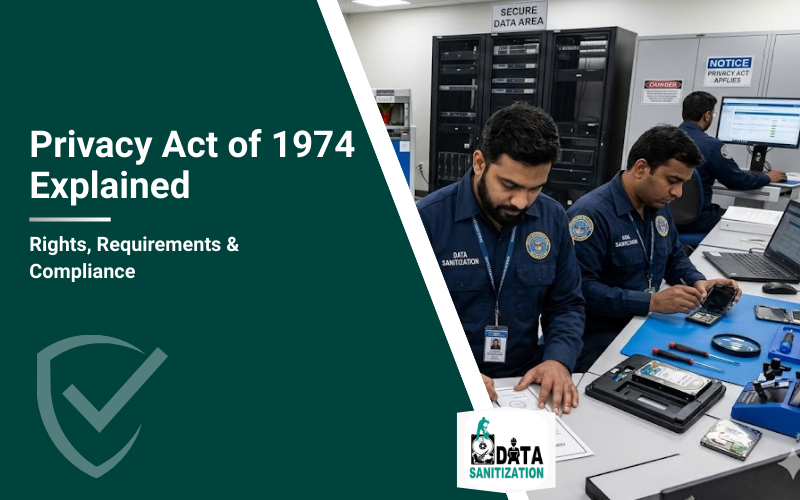
The Privacy Act of 1974 is a landmark U.S. federal law that governs how federal agencies handle personal data. Its purpose is to protect individuals from unauthorized disclosure of their personal information while ensuring transparency and accountability in government data processing.

For organizations—especially those working with federal contracts, IT assets or sensitive data—understanding and complying with this act is crucial. Secure IT asset destruction, certified hard drive wiping and mobile device sanitization are key steps in meeting Privacy Act compliance.
At Data Sanitization, we provide certified data destruction services, including hard drives, SSDs, mobile devices and storage media, to help organizations fully comply with privacy regulations like the Privacy Act of 1974.
What is the Privacy Act of 1974?
The Privacy Act of 1974 was enacted to regulate federal agencies’ collection, use and disclosure of personal information. The act applies to any record systems maintained by U.S. federal agencies that contain personal data about individuals.
Key Objectives of the Privacy Act 1974:
- Protect Individual Privacy: Limit how personal information is collected and shared
- Grant Individuals Access: Allow individuals to view records about themselves
- Correct Inaccurate Data: Enable individuals to amend records that are incorrect
- Restrict Disclosure: Prevent unauthorized sharing of personal data
- Establish Accountability: Require agencies to maintain transparency and follow strict procedures
For organizations managing IT assets containing federal data, compliance with the Privacy Act includes ensuring secure destruction of records and devices that contain personal information.
Who Must Comply with the Privacy Act of 1974?
While the law directly governs federal agencies organizations working with government contracts or handling federal data are indirectly affected. Compliance requirements include:
- Federal contractors handling sensitive information
- IT and data management companies
- Organizations providing data storage, backup and disposal services
- Companies disposing of hard drives, SSDs, mobile devices or storage media containing personal data
Data Sanitization helps these organizations achieve compliance by providing certified data destruction services, ensuring all sensitive data is erased securely before reuse, resale or disposal.
Individual Rights Under the Privacy Act

The Privacy Act of 1974 grants several important rights to individuals:
- Access to Records: Individuals can request access to records maintained about them
- Correction of Data: Individuals can request amendments to inaccurate or incomplete records
- Restrictions on Disclosure: Agencies must get consent before sharing personal information, except under specific legal exceptions
- Notification of Systems: Agencies must notify the public about the existence and purpose of record systems
Organizations handling personal data must respect these rights and secure IT asset destruction ensures that private information is permanently erased, mitigating risks of unauthorized disclosure.
Organizational Requirements Under the Privacy Act
Organizations handling federal or sensitive personal data must follow these key requirements:
- Data Minimization: Collect only what is necessary
- Secure Storage: Protect records with encryption and physical security
- Access Control: Restrict data access to authorized personnel
- Accurate Record-Keeping: Maintain correct and up-to-date information
- Secure Disposal: Permanently erase or destroy outdated or unnecessary records
How Data Sanitization Supports Compliance:
- Certified Hard Drive Wiping: Permanent erasure of corporate HDDs
- SSD and Mobile Device Sanitization: Ensures no recoverable personal data
- Certificate of Destruction: Proof that IT assets have been destroyed securely
- Emergency Data Destruction Services: Fast, compliant erasure for urgent needs
Following these practices not only supports Privacy Act compliance but also reduces the risk of data breaches and regulatory penalties.
Data Sanitization Best Practices for Compliance

Organizations can ensure full compliance with the Privacy Act by following these best practices:
- Audit IT Assets: Identify hard drives, SSDs and mobile devices storing personal data
- Classify Sensitive Records: Determine which records contain personally identifiable information (PII)
- Use Certified Destruction Services: Employ services like Data Sanitization for secure wiping, degaussing or physical destruction
- Document Everything: Maintain Certificates of Destruction for audit readiness
- Train Staff: Educate employees about handling PII and following proper disposal protocols
By following these steps organizations minimize risk while ensuring federal data handling standards are met.
Why Choose Data Sanitization for Privacy Act Compliance?
Data Sanitization specializes in providing secure, certified and audit-ready data destruction solutions. Our services help organizations comply with regulations such as the Privacy Act of 1974, GDPR and Data Protection Act 2018.
Our Key Services Include:
- Hard Drive and SSD Data Destruction: Secure wiping or physical destruction
- Mobile Device Sanitization: Smartphones, tablets, USBs and other portable media
- Emergency Data Destruction: Rapid response for urgent compliance needs
- Certificates of Destruction: Documentation to prove secure and permanent data removal
Industries We Serve:
- IT and tech companies
- Banks and financial institutions
- Healthcare providers
- Government contractors
Conclusion
The Privacy Act of 1974 ensures that personal information handled by federal agencies and related organizations is protected, accurate and secure. Compliance is essential to avoid legal penalties, maintain trust and prevent data breaches.
Data Sanitization helps organizations achieve full compliance by providing certified, secure and permanent data destruction services for hard drives, SSDs, mobile devices and other IT assets. With our Certificates of Destruction organizations can demonstrate audit-ready compliance, ensuring that sensitive information is protected at every stage of the IT asset lifecycle.
FAQs About the Privacy Act of 1974
Q1: What is the Privacy Act of 1974?
A: It is a U.S. federal law that regulates how federal agencies collect, use and disclose personal data.
Q2: Who must comply with the Privacy Act?
A: Federal agencies, contractors handling federal data and organizations disposing of IT assets containing personal information.
Q3: How can organizations comply?
A: Through secure data destruction, certified IT asset sanitization, access controls, accurate record-keeping and staff training.
Q4: What is a Certificate of Destruction?
A: Proof that all sensitive data has been permanently erased according to compliance standards.
Q5: How does Data Sanitization help?
A: We provide certified data wiping, hard drive and SSD destruction, mobile device sanitization, emergency data destruction and full documentation for compliance audits.