
The General Data Protection Regulation (GDPR) has transformed how organizations handle personal data. Introduced by the European Union in 2018, GDPR sets strict standards for data collection, processing, storage and disposal, with heavy penalties for non-compliance.

For businesses handling sensitive data – from customer information to employee records and IT assets – understanding and implementing GDPR principles is crucial.
At Data Sanitization, we help organizations achieve full GDPR compliance through certified data wiping, IT asset destruction and secure disposal. From hard drives and SSDs to mobile devices, we ensure your sensitive data is permanently erased while meeting all regulatory requirements.
What is GDPR?
The General Data Protection Regulation (GDPR) is a data privacy law that governs how organizations handle personal data of EU citizens, regardless of where the organization is located. GDPR aims to:
- Protect individual privacy
- Give individuals control over their personal data
- Ensure organizations handle data responsibly
- Enforce transparency in data processing practices
GDPR applies to all organizations that collect, store or process personal data, including MNCs, IT companies, SMEs and government contractors.
Failure to comply can result in fines up to €20 million or 4% of global annual turnover, emphasizing the critical need for compliance strategies, including secure data destruction.
The 7 Core GDPR Principles
GDPR outlines seven key principles that organizations must follow:
1. Lawfulness, Fairness and Transparency
- Data must be processed legally, fairly and in a transparent manner
- Individuals should be informed about how their data is used
Compliance Tip: Maintain detailed records of data collection practices and ensure your privacy policies are clear and accessible.
2. Purpose Limitation
- Data must be collected for specific, explicit purposes
- It cannot be used for unrelated purposes without consent
Compliance Tip: Audit all IT assets and classify data based on processing purposes. Data Sanitization ensures secure disposal of outdated or unnecessary information.
3. Data Minimization

- Only collect data necessary for the intended purpose
- Avoid over-collection of personal or sensitive information
Compliance Tip: Regularly review data storage systems and permanently erase unnecessary data using certified wiping or destruction services.
4. Accuracy
- Organizations must keep data accurate and up-to-date
- Individuals can request corrections to their personal data
Compliance Tip: Implement regular data audits and ensure records are reviewed and sanitized when no longer needed.
5. Storage Limitation
- Personal data should only be stored as long as necessary
- Secure deletion of outdated data is required
Compliance Tip: Data Sanitization provides secure IT asset destruction and certificate of destruction, proving that obsolete data has been permanently removed.
6. Integrity and Confidentiality
- Data must be protected against unauthorized access, theft or destruction
- Organizations must implement robust technical and organizational measures
Compliance Tip: Use encryption, access controls and certified data wiping services to protect sensitive information.
7. Accountability
- Organizations must demonstrate compliance with all GDPR principles
- Records of data processing, audits and destruction must be maintained
Compliance Tip: Certificates of destruction from Data Sanitization provide evidence for audits and regulatory inspections.
How Organizations Can Ensure GDPR Compliance

Achieving full GDPR compliance requires a structured approach across data handling, storage and disposal.
Step 1: Conduct a Data Audit
- Identify all data types across your organization
- Classify data according to sensitivity and purpose
Step 2: Implement Data Security Measures
- Encrypt sensitive files
- Use firewalls, access control and monitoring systems
Step 3: Secure Data Disposal
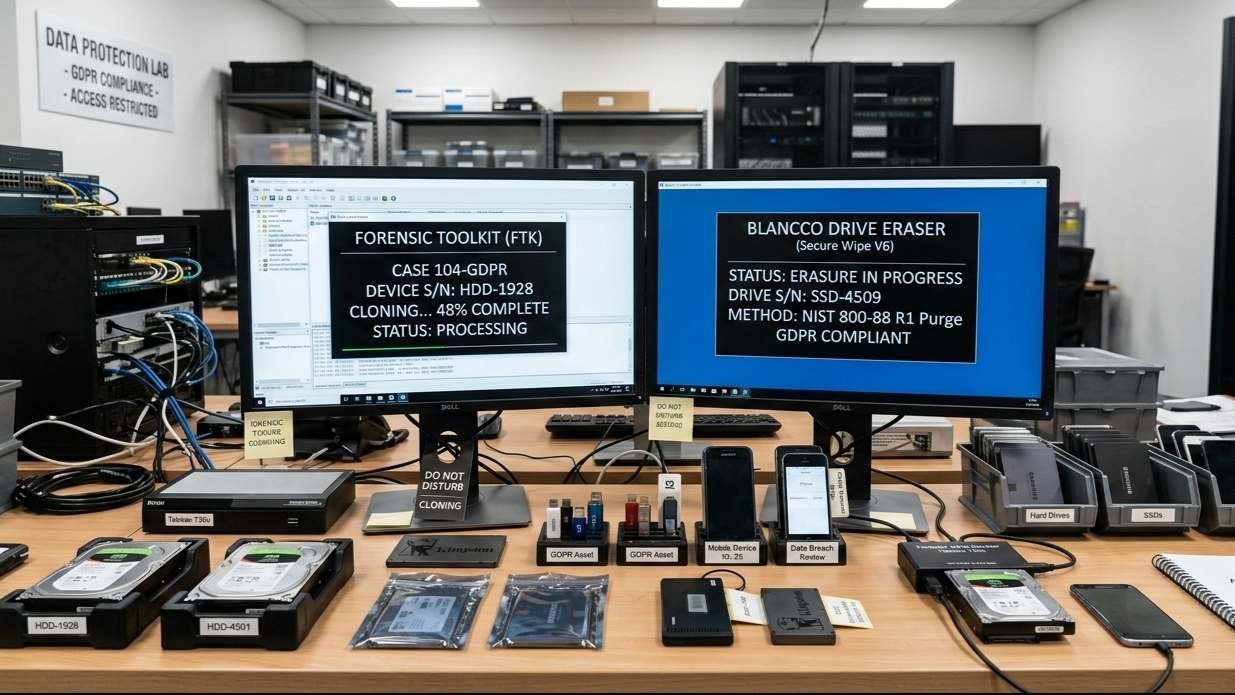
- Retire IT assets such as hard drives, SSDs, servers and mobile devices
- Partner with Data Sanitization for certified data destruction, wiping and mobile device sanitization
Step 4: Maintain Records and Documentation
- Document data processing activities
- Retain Certificates of Destruction for retired IT assets
Step 5: Employee Training
- Educate staff on GDPR requirements and proper data handling
- Regularly review policies and practices
The Role of Data Sanitization in GDPR Compliance

Proper IT asset management is critical to GDPR compliance. Data Sanitization ensures that organizations:
- Permanently erase personal and corporate data from hard drives, SSDs and mobile devices
- Provide audit-ready Certificates of Destruction
- Offer emergency data destruction services for urgent compliance needs
- Follow NIST and ADISA-certified processes, meeting global data security standards
Industries We Serve:
- IT companies and MNCs
- Banks and financial institutions
- Healthcare and education sectors
- Public sector organizations
Partnering with Data Sanitization ensures all sensitive data is securely handled, fully compliant and permanently destroyed when no longer needed.
Conclusion
The GDPR principles set a global standard for data privacy, requiring organizations to handle personal data responsibly, securely and transparently. Compliance protects both individuals and businesses from data breaches, fines and reputational damage.
Data Sanitization helps organizations achieve full GDPR compliance by providing certified data destruction, mobile device sanitization and audit-ready certificates. From hard drives and SSDs to mobile devices, our services ensure that sensitive data is permanently erased, compliant and secure.
FAQs About GDPR Principles and Compliance
Q1: What are the core GDPR principles?
A: Lawfulness, fairness, transparency, purpose limitation, data minimization, accuracy, storage limitation, integrity, confidentiality and accountability.
Q2: Do all organizations need to comply with GDPR?
A: Yes, any organization that processes the personal data of EU citizens must comply, regardless of location.
Q3: How can IT assets be safely disposed of under GDPR?
A: Through certified data wiping, degaussing or physical destruction by companies like Data Sanitization.
Q4: What is a Certificate of Destruction?
A: Official proof that sensitive data has been permanently erased in compliance with GDPR standards.
Q5: Why is Data Sanitization important for GDPR compliance?
A: We provide secure, certified and audit-ready destruction of IT assets, ensuring compliance and minimizing the risk of data breaches.