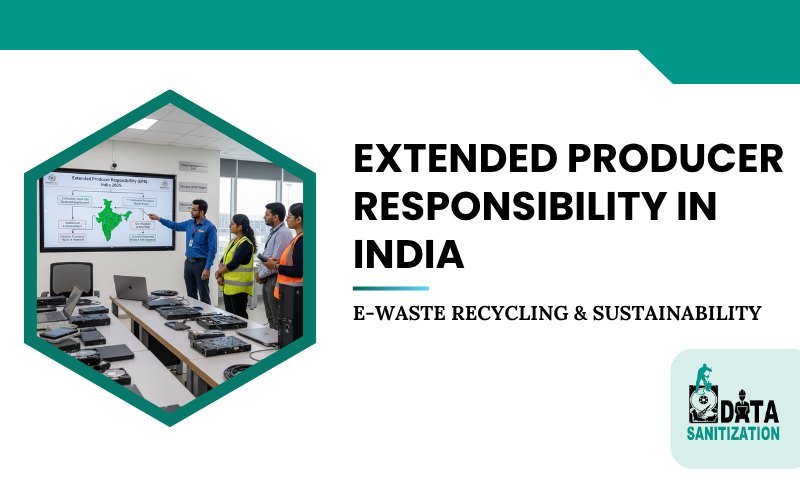
Extended Producer Responsibility (EPR) has become a cornerstone of sustainable waste management in India. As part of India’s broader efforts to tackle the growing issue of e-waste, EPR regulations play a crucial role in managing the lifecycle of electronic products. In 2025, these regulations have become stricter, focusing on safe disposal of e-waste, recycling practices, and ensuring data sanitization before devices are discarded.

The EPR guidelines are specifically designed to hold producers of electronics and electrical appliances accountable for the end-of-life management of their products. This includes collection, recycling, and the secure disposal of electronic products—especially those containing sensitive data. Data sanitization is an essential step in ensuring electronic devices do not pose a security risk once they reach the end of their lifecycle.
🔄 What is Extended Producer Responsibility (EPR)?
EPR is a regulatory framework that requires producers (such as manufacturers, importers, and brand owners) to bear the responsibility of managing the waste generated by their products at the end of their useful life. In the context of e-waste, this means ensuring that electronics are properly disposed of or recycled.
In India, EPR now includes a broader scope, covering e-waste, plastic packaging, and batteries. One of the key aspects of EPR compliance, particularly for electronic devices, is data sanitization — which refers to securely erasing any data stored on devices like hard drives, mobile phones, tablets, memory cards, and other storage media.
🏛 How EPR Works in India (2025) and the Role of Data Sanitization

India’s EPR guidelines for 2025 have tightened the rules surrounding electronic waste management and introduced stricter penalties for non-compliance. Here’s how data sanitization fits into the EPR process:
1. E-Waste Management Rules (2025):
Under the updated E-Waste Management Rules, producers of electronic products are now required to ensure their products are collected, recycled, or disposed of properly at the end of their lifecycle. This is where data sanitization plays a key role — before any device is sent for recycling, all sensitive information must be securely erased.
2. The Importance of Data Sanitization:
Data sanitization involves securely wiping data off a device to make it unrecoverable by unauthorized users. This step is crucial to prevent the misuse of personal or corporate data stored on old devices like hard drives, SSDs, laptops, or mobile phones. If data is not properly erased, it could be accessed by unauthorized individuals, leading to data theft, identity theft, or other security breaches.
Businesses managing e-waste should partner with certified data sanitization service providers to ensure that their data sanitization processes meet legal and regulatory standards.
📋 Steps for Businesses to Ensure EPR Compliance and Data Sanitization

To comply with EPR regulations and ensure secure data sanitization, businesses must follow these steps:
1. Register with Regulatory Authorities:
Producers of electronic goods must register with the Central Pollution Control Board (CPCB) or their State Pollution Control Boards (SPCBs) to comply with EPR regulations. This registration ensures that the business is legally accountable for e-waste disposal and data sanitization of their products.
2. Implement Data Wiping and Data Erasure:
Before any e-waste is sent for recycling, businesses must ensure data sanitization processes are in place. This involves using certified data wiping methods to ensure that no recoverable data remains on the device. Data sanitization should follow established standards like DoD 5220.22-M or NIST SP 800-88, which guarantee that all data is securely wiped and cannot be retrieved.
3. Partner with Certified Data Sanitization Providers:

To ensure the data on your devices is safely wiped, partnering with a trusted data sanitization service provider is critical. Professionals use state-of-the-art technology to provide comprehensive data destruction services, ensuring full compliance with EPR requirements and data protection laws. Providers like www.datasanitization.in offer secure data sanitization solutions that cater to businesses dealing with large volumes of e-waste.
4. Send E-Waste to Certified Recycling Facilities:
After data wiping, the e-waste can be sent to certified e-waste recycling centers. These facilities ensure that the materials are recycled responsibly and in compliance with EPR guidelines.
5. Compliance Reporting and Documentation:
Businesses must maintain detailed records of the data sanitization process and e-waste disposal efforts. This includes providing documentation on how data was securely erased from devices and how e-waste was handled in compliance with EPR regulations. These records should be submitted annually to the CPCB as part of EPR compliance reporting.
🛡 Why Data Sanitization is Crucial in EPR Compliance
Here’s why data sanitization is a critical part of the EPR framework:

1. Protection Against Data Breaches:
With the rise in data breaches globally, ensuring that devices are properly wiped before being recycled is essential to prevent sensitive data from being exposed. Devices like mobile phones, computers, and external hard drives often contain personal information that must be protected.
2. Reputation Management:
A company that prioritizes data security through proper data sanitization enhances its reputation as a responsible business. Failing to wipe devices properly could lead to a data breach, damaging the company’s reputation and customer trust.
3. Compliance with Legal Requirements:
Compliance with data protection laws such as GDPR and India’s IT Act is mandatory. Businesses that fail to securely sanitize their e-waste may face legal penalties and fines.
4. Environmental Responsibility:
Data sanitization isn’t just about security — it’s also about environmental responsibility. By properly recycling e-waste after secure data wiping, businesses ensure that they contribute to sustainability, reducing pollution and conserving resources.
🔐 Secure Data Sanitization Solutions for EPR Compliance

For businesses looking to stay compliant with EPR regulations and ensure data security, partnering with a trusted data sanitization service provider is essential. www.datasanitization.in offers comprehensive solutions for data wiping, data erasure, and data destruction, helping companies meet EPR obligations while ensuring data protection.
Their services include:
🖥 On-Site Data Sanitization for businesses
📱 Mobile Device Data Wiping
💾 Hard Drive and SSD Data Erasure
🛡 Data Destruction Services (shredding, crushing, etc.)
📜 Compliance Certifications for EPR and data protection laws
📞 Contact Information
For secure data sanitization services and EPR compliance solutions, reach out to Data Engineers:
📱 Phone: +91-852-770-9690
✉️ Email: support@datasanitization.in
🌐 Website: www.datasanitization.in
🌍 Conclusion: The Future of EPR and Data Sanitization in India (2025)
As EPR regulations in India continue to evolve in 2025, businesses must prioritize data sanitization as a critical part of their e-waste management strategies. By ensuring that devices are properly wiped before recycling and partnering with experts in data sanitization, companies can comply with EPR regulations, protect sensitive information, and contribute to environmental sustainability.
With EPR compliance becoming more stringent, companies should work with trusted partners like www.datasanitization.in to secure data, protect their brand reputation, and ensure a cleaner, greener, and more secure future.