Introduction
Every computer, laptop, hard drive, SSD, server and storage device contains information that may remain sensitive even after the equipment is no longer in use. When businesses upgrade their IT infrastructure or individuals sell, donate or recycle old devices, protecting the information stored on them becomes an important responsibility.
Simply deleting files or formatting a storage device does not always provide sufficient protection. In some situations, previously stored information may still be accessible through data recovery methods. This is why businesses need a reliable approach to Secure Data Erasure, Permanent Data Wiping and Permanent Data Destruction before transferring or disposing of their IT equipment.
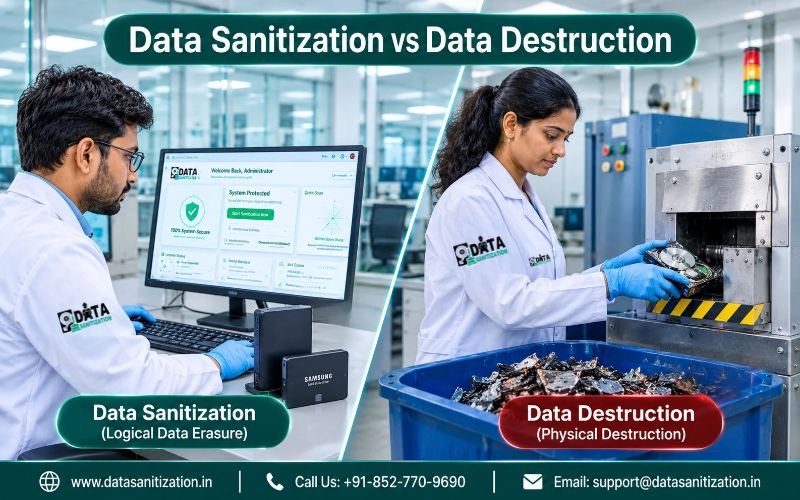
Two commonly used terms in this process are data sanitization and data destruction. Although both are connected with secure data removal, they involve different methods and outcomes. Data sanitization can prepare a working device for reuse, while physical data destruction makes the storage media unusable.
Understanding Data Sanitization vs Data Destruction helps businesses select the right method according to their data security requirements, storage technology and future plans for the equipment.
For organisations handling multiple storage devices, professional Data Erasure Services and Professional Data Destruction Services can help establish a structured approach to protecting confidential information.
What Is Data Sanitization?
Data sanitization is the process of making information stored on a device inaccessible through an appropriate method. The selected method depends on the type of storage media, the sensitivity of the information and whether the device needs to be reused or permanently retired.
Unlike ordinary file deletion, professional data sanitization focuses on removing access to stored information across the relevant storage media.
Common data sanitization methods include:
Data Overwriting: This method writes new data over existing information on supported storage media. It is commonly associated with Hard Drive Data Wiping, although its suitability depends on the device and sanitization requirements.
Cryptographic Erasure: This method makes encrypted data inaccessible by sanitizing the relevant encryption keys. It is suitable only when the device’s encryption implementation and key management meet the required conditions.
Device-Based Secure Erase: Some storage devices support built-in sanitization commands or functions. These can be used where the device supports the required operation and the result can be properly validated.
Physical Destruction: When logical data erasure is not suitable, physical destruction may be selected to damage the storage media and prevent its continued use.
Professional Data Sanitization Services help businesses manage secure data removal from HDDs, SSDs, laptops, desktops, servers and other digital storage devices before reuse, resale or recycling.
A professional Data Erasure Company can also help organisations understand which sanitization method is suitable for their storage technology and security requirements. Experienced Data Erasure Specialists consider the device condition, storage type and intended outcome before recommending a suitable process.
What Is Data Destruction?
Data destruction refers to making stored information inaccessible through an appropriate data removal process. In many IT asset disposal and recycling projects, the term specifically refers to the physical destruction of storage media.
Physical data destruction damages the components that hold information, making the device unsuitable for normal reuse.
Some commonly used physical data destruction methods include:
Hard Drive Shredding: A specialised machine breaks storage devices into smaller pieces. For hard drives, the process must properly damage the data-bearing components.
Crushing: Mechanical force is applied to damage the storage device. The effectiveness of the process depends on the equipment and whether the actual data-storage components are sufficiently damaged.
Degaussing: A strong magnetic field is used on compatible magnetic storage media. This method is not suitable for flash-based SSDs, USB drives or memory cards.
SSD Destruction: Since SSDs store information on NAND flash memory chips, physical destruction must target the relevant memory components. Damaging only the external casing may not be sufficient.
Physical data destruction is generally considered when storage media cannot be reliably sanitized, is no longer required for reuse or must be destroyed under an organisation’s security policy.
Businesses looking for Permanent Data Destruction Services or Data Destruction Services in India should select a method that matches their storage devices and information security requirements.
A professional Data Destruction Company should also provide suitable reporting and documentation for the work performed.
Data Sanitization vs Data Destruction: Key Differences
Although data sanitization and data destruction share the same goal of protecting confidential information, their methods, applications and final outcomes can be different.
1. Purpose and Process
Data sanitization focuses on making stored information inaccessible through an appropriate erasure or destruction method. Physical data destruction focuses on damaging the storage media and its data-bearing components so that the device cannot be used normally again.
2. Methods Used
Data sanitization may involve data overwriting, cryptographic erasure and supported secure erase commands. Physical data destruction may involve hard drive shredding, crushing or degaussing for compatible magnetic media.
3. Device Reusability
One major difference is whether the storage device can be reused. After successful data sanitization, a functional HDD or SSD may remain usable, depending on its condition. Physical destruction generally makes the device unsuitable for further use.
4. Suitable Applications
Data sanitization is useful when businesses plan to reuse, resell, redeploy or recycle their IT equipment. Physical destruction is more suitable when storage media is damaged, cannot be reliably sanitized or must be destroyed under an organisation’s security requirements.
5. Verification and Documentation
Data sanitization may include erasure verification, device details and a Certificate of Data Erasure. Physical destruction may involve inspection and documentation confirming that the storage media was destroyed.
6. Environmental Considerations
Data sanitization can support the reuse and refurbishment of working IT equipment, helping extend its useful life. Physical destruction produces damaged storage components that require responsible handling and recycling.
The right approach depends on the storage device, its condition, the sensitivity of the information and whether the equipment needs to be reused or permanently retired.

Data Sanitization Methods: Clear, Purge and Destroy
For organisations developing a structured media sanitization process, understanding the different sanitization outcomes is important.
NIST Special Publication 800-88 Revision 2, also known as NIST SP 800-88 Rev. 2, describes three primary media sanitization methods: Clear, Purge and Destroy. It provides guidance for organisations to establish a media sanitization programme based on information sensitivity, storage media and disposal or reuse requirements.
Clear
Clear sanitization uses logical techniques to remove data from storage media while keeping the device usable. Depending on the technology and security requirements, suitable overwriting methods may be considered.
This approach can be useful when businesses want to prepare eligible storage devices for internal reuse or redeployment.
Purge
Purge sanitization applies methods intended to make data recovery significantly more difficult, including against advanced recovery techniques. Depending on the storage technology, suitable device-based sanitization or cryptographic erasure may be considered.
It can be relevant when businesses plan to transfer working storage devices outside their organisation while protecting previously stored information.
Destroy
Destroy sanitization involves physically damaging the storage media so that it cannot be reused as originally intended. Methods may include shredding, disintegration or other suitable destruction processes.
This approach may be selected when the device cannot be reliably sanitized or when the organisation’s security policy requires physical destruction.
The correct method should be selected after considering data sensitivity, media type, device condition and the intended final use of the equipment.
For further technical guidance, organisations can refer to the official NIST Guidelines for Media Sanitization (SP 800-88 Rev. 2).
When Should You Choose Data Sanitization?
Data sanitization is often a suitable option when storage devices are functional and may have further value. It helps businesses protect confidential information without automatically destroying usable hardware.
1. Selling or Reselling IT Equipment
Before selling used laptops, desktops, servers or storage devices, businesses should arrange secure data wiping. Customer records, employee details, financial information and internal documents should not remain accessible to the next owner.
Professional Data Erasure Services can help prepare eligible devices for resale or refurbishment. A suitable Data Erasure Provider should have the ability to process different storage technologies and provide appropriate verification.
2. Reusing Old Storage Devices
Many organisations replace their IT equipment while some existing hard drives and SSDs are still functional. Secure data erasure can help prepare eligible devices for internal reuse or redeployment.
Professional Hard Drive Data Erasure and SSD Data Wiping can support secure information removal while helping businesses retain the value of reusable hardware.
3. IT Asset Disposition (ITAD)
IT Asset Disposition involves managing retired IT equipment through reuse, refurbishment, resale, recycling or disposal. Data sanitization is an important part of this process because storage devices may contain confidential business information.
Reliable ITAD Data Sanitization and IT Asset Data Wiping help organisations manage information security before equipment moves to another user or facility.
4. Managing Bulk Business Devices
Companies handling hundreds or thousands of computers and storage devices need a consistent process for data wiping, device identification, verification and documentation.
Professional Enterprise Data Erasure solutions can help businesses manage bulk HDD sanitization, SSD data erasure and other storage media sanitization requirements.
For larger IT environments, Data Center Data Wiping is also important when organisations replace servers, storage arrays and retired data centre equipment.

When Is Physical Data Destruction the Better Choice?
Physical destruction may be appropriate when a storage device cannot be securely sanitized or when organisational requirements specifically call for destruction.
Common situations include:
- A failed or severely damaged hard drive that cannot complete a reliable sanitization process.
- Storage media with unsupported or inaccessible sanitization features.
- Devices containing highly sensitive information where physical destruction is required by policy.
- Old storage media that has no further reuse or resale value.
- Situations where contractual or internal security requirements specify physical media destruction.
The destruction method should match the storage technology. For example, degaussing is intended for compatible magnetic media and should not be treated as an effective method for SSD data destruction.
Businesses requiring Permanent Hard Drive Wiping, Hard Disk Secure Wiping or physical destruction should first understand whether the device can be securely sanitized and whether it needs to remain operational.

HDD vs SSD: Why the Data Removal Method Matters
Not every storage device works in the same way. Therefore, the same data wiping method may not be suitable for every type of media.
Hard Disk Drive (HDD) Data Sanitization
A hard disk drive stores information magnetically on rotating platters. Depending on the drive and security requirements, suitable overwriting or supported device-based sanitization methods may be used.
Professional HDD Data Wiping Services help businesses prepare eligible hard drives for reuse, resale or responsible disposal. The appropriate Hard Drive Wiping Services should be selected according to the drive’s technology and condition.
For organisations managing multiple magnetic storage devices, Professional HDD Wiping can help establish a structured approach to secure information removal.
If your organisation needs secure data removal from magnetic hard drives, explore our Hard Disk Drive Data Sanitization Services.
Solid State Drive (SSD) Data Sanitization
A solid state drive stores information in NAND flash memory. Features such as wear levelling and over-provisioning can make traditional overwriting less suitable for certain sanitization requirements.
For this reason, supported SSD Secure Erase, sanitize or cryptographic erasure methods may be more appropriate, depending on the device.
Businesses should identify whether they are handling HDDs, SATA SSDs, NVMe SSDs or other storage media before selecting a secure data erasure method.
Professional SSD Data Wiping and Permanent SSD Data Deletion should follow methods appropriate to the particular storage technology.
Learn more about our SSD Data Sanitization Services for professional storage media handling.
Role of Data Sanitization in IT Asset Disposal and E-Waste Recycling
Old IT equipment often passes through several stages before reaching its final destination. A company may send retired laptops, computers, servers and storage devices for refurbishment, resale or e-waste recycling.
During this process, sensitive information can remain on hard drives, SSDs, USB storage devices and other digital media if secure data removal is ignored.
This is why data sanitization should be considered before IT equipment leaves an organisation’s control.
For ITAD companies and e-waste recycling businesses, secure data wiping helps separate the process of information protection from the physical handling of retired equipment. Functional devices may be considered for reuse after suitable sanitization, while unsuitable storage media may require physical destruction.
A planned Data Destruction and IT Asset Disposal process can therefore support both information security and responsible IT asset management.
How to Choose the Right Data Sanitization or Data Destruction Service
Selecting a professional data sanitization company requires more than comparing service prices. Businesses should understand how the service provider identifies devices, selects methods and documents the results.
Before selecting Data Erasure Services or Professional Data Destruction Services, consider the following points:
Understand Your Storage Media: Identify whether your devices contain HDDs, SSDs, NVMe drives, USB flash drives, mobile storage or server storage.
Check the Device Condition: Functional devices may be suitable for data erasure, while damaged or inaccessible media may require another approach.
Review the Sanitization Method: Ask how the service provider selects an appropriate data wiping or physical destruction method for different storage technologies.
Ask About Verification: Understand how the provider checks the result and handles unsuccessful or incomplete operations.
Review Documentation: Confirm whether device-level reports, serial number records and data sanitization certificates are available for the project.
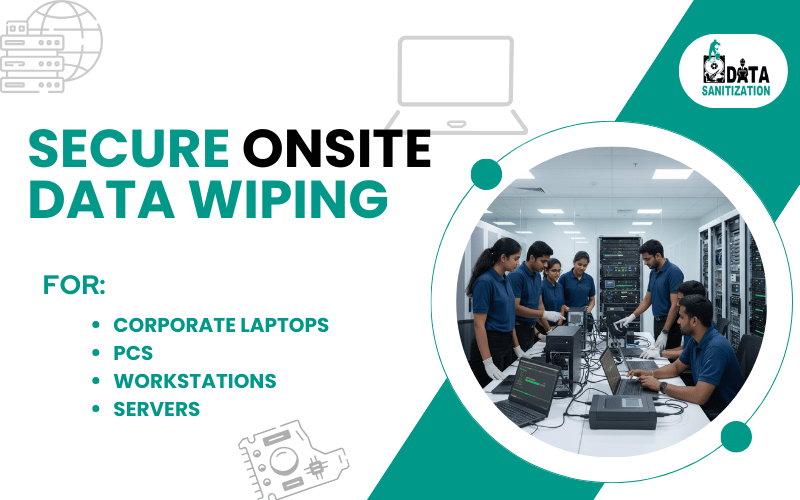
Consider Onsite and Offsite Services: Depending on the organisation’s requirements, On-Site Data Wiping Services may be preferred when the process needs to take place at the customer’s premises. Offsite Data Erasure Services may be considered when devices can be securely transferred for processing at a designated facility.
A suitable Data Wiping Provider should be able to explain the process clearly and help the organisation select an approach based on its actual requirements.
Organisations searching for Data Erasure Services Near Me, Data Erasure Services India or Data Wiping Services Near Me should evaluate the service provider’s actual capabilities, experience, verification process and documentation.
Data Erasure and Data Destruction Services in India
Businesses operating across different cities may require professional data sanitization support for their offices, IT infrastructure, data centres and retired storage devices.
Data Sanitization provides professional data sanitization services for organisations requiring secure data removal from HDDs, SSDs, mobile phones, USB flash drives, servers and other digital storage media.
We support organisations looking for Data Erasure Services in India, including service requirements in New Delhi, Delhi NCR and other locations across India.
Businesses searching for Data Erasure Services New Delhi, Data Erasure Services Delhi, Data Erasure Services Delhi NCR, Data Erasure Services Nehru Place and Data Erasure Services Kalkaji can contact our team to discuss their project requirements.
We also cater to organisations requiring Data Erasure Services Gurugram, Data Erasure Services Noida, Data Erasure Services Mumbai and other regional service requirements, subject to project feasibility and service arrangements.
Our service options include:
1.HDD and SSD data sanitization.
2.Hard drive data wiping.
3.Laptop and desktop data erasure.
4.Server and data centre storage sanitization.
5.Mobile phone and USB storage sanitization.
6.Onsite data sanitization.
7.Offsite data sanitization.
Verification, reporting and sanitization certificates.
Organisations looking for Secure Data Wiping Services in Delhi NCR or a professional Data Erasure Company in New Delhi can discuss their requirements with our team.
Professional Data Sanitization Services by Data Sanitization
Businesses handling retired IT equipment need a reliable approach to protect confidential information before devices are reused, resold or recycled.
Data Sanitization provides professional Data Erasure Services and data destruction solutions for organisations that need secure data removal from hard disk drives, solid state drives, mobile phones, USB flash drives, servers and other digital storage media.
Depending on the project requirements and device condition, the service process can include device assessment, appropriate data erasure or destruction, verification, reporting and certification.
Organisations can consider On-Site Data Wiping Services when they prefer the process to take place at their own premises. Offsite data sanitization can also be considered for devices that need to be processed at a designated facility.
Our services are relevant for organisations managing IT asset disposal, enterprise storage devices, ITAD operations, office equipment replacement and e-waste recycling projects.
Whether you are managing individual storage devices or a larger IT asset disposal project, selecting the appropriate data sanitization method is an important step in protecting business information.
Explore our Data Sanitization Services to understand the available service options.

Common Data Sanitization and Data Destruction Mistakes to Avoid
Even organisations with established IT asset management processes can make mistakes while disposing of storage devices.
Some common mistakes include:
1.Assuming that deleting files permanently removes all stored information.
2.Treating quick formatting as a complete secure data erasure process.
3.Using the same hard drive wiping method for every storage technology.
4.Ignoring damaged or non-functional storage devices.
5.Skipping verification and documentation after data sanitization.
6.Sending old computers and storage devices for e-waste recycling without considering the information stored on them.
7.Destroying functional devices when a suitable data sanitization method could have supported reuse.
8.Failing to maintain records of processed IT assets.
Avoiding these mistakes can help businesses establish a more organised process for secure data destruction, IT asset disposal and storage media management.
Conclusion
Understanding Data Sanitization vs Data Destruction helps individuals and businesses make better decisions when handling old IT equipment.
Data sanitization can help protect confidential information while preserving the value of functional storage devices. Physical data destruction is an alternative when a device cannot be reliably sanitized, is no longer suitable for reuse or must be destroyed under an organisation’s security requirements.
The right choice depends on the storage technology, data sensitivity, device condition and final purpose of the equipment.
For businesses, professional Data Erasure Services, Secure Data Wiping, Permanent Data Destruction and IT Asset Data Wiping can support a more organised approach to information security and IT asset disposal.
Before selling, reusing, donating or recycling any data-bearing device, make secure data removal an essential part of your IT asset management process. A planned approach to data sanitization and data destruction can help protect business information and support more responsible IT asset disposal.
Frequently Asked Questions (FAQs)
Data sanitization is the broader process of making stored information inaccessible through suitable logical or physical methods. Physical data destruction damages the storage media itself, making the device unsuitable for normal reuse.
It depends on the device condition, information sensitivity and intended use. Data sanitization can be suitable when a working device needs to be reused or resold. Physical destruction may be appropriate when the media cannot be reliably sanitized or must be destroyed under an organisation’s requirements.
Yes. A functional hard drive may be reused after an appropriate data sanitization process has been completed and the result has been verified. Its physical condition and operational health should also be considered.
A normal quick format should not be treated as proof of secure data sanitization. The appropriate method depends on the storage technology, data sensitivity and required level of protection.
Not always. Supported SSD sanitization methods may allow data to be removed while preserving the device. Physical SSD destruction can be considered when secure erasure is not possible or when organisational requirements demand it.
NIST SP 800-88 Rev. 2 is a publication titled Guidelines for Media Sanitization. It provides guidance for organisations on establishing a media sanitization programme and selecting suitable approaches based on information sensitivity and media requirements.
Data sanitization helps protect confidential information before IT equipment is reused, resold, donated or recycled. It is an important part of responsible IT Asset Disposition (ITAD).
A Certificate of Data Erasure is a document that records information about a completed data sanitization process. Depending on the service and reporting system, it may include device details, the method used and the recorded outcome.
Data wiping uses an appropriate logical method to remove access to stored information and may allow the device to remain usable. Hard drive destruction physically damages the storage media and generally prevents the device from being reused.
The choice depends on the organisation’s security policy, asset volume, logistics and project requirements. Onsite data sanitization takes place at the customer’s premises, while offsite data sanitization involves processing devices at a designated facility.